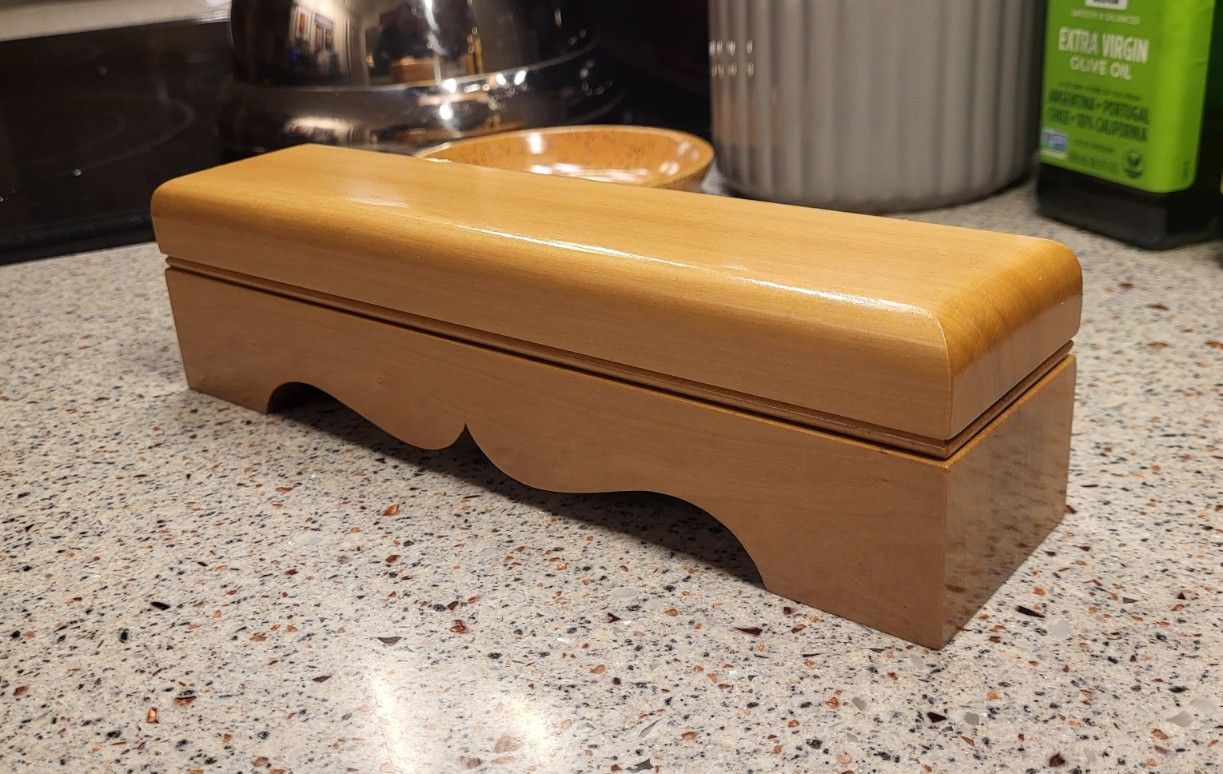
I mentioned in the last post that I wanted to explore something more interesting with the boxes, like a furniture-like shape. I thought this would look like a couch without the back. Which my daughter came down and quickly blurted out “that’s an ottoman”. Which made me also realize that I missed the opportunity to do this style of box with one of the turkish oilstones. The two I have are permanently seated in something already and they are very irregular in shape, so that ship has sailed.
I think this is an interesting shape, but it’s lacking something a little bit and could be more interesting without much more work. Maybe another time. It’s the same boxwood substitute – Castelo Boxwood, which is interesting because it doesn’t stand out as much at first and could be confused for Maple. It’s harder than maple, but in some ways, easier to work by hand.
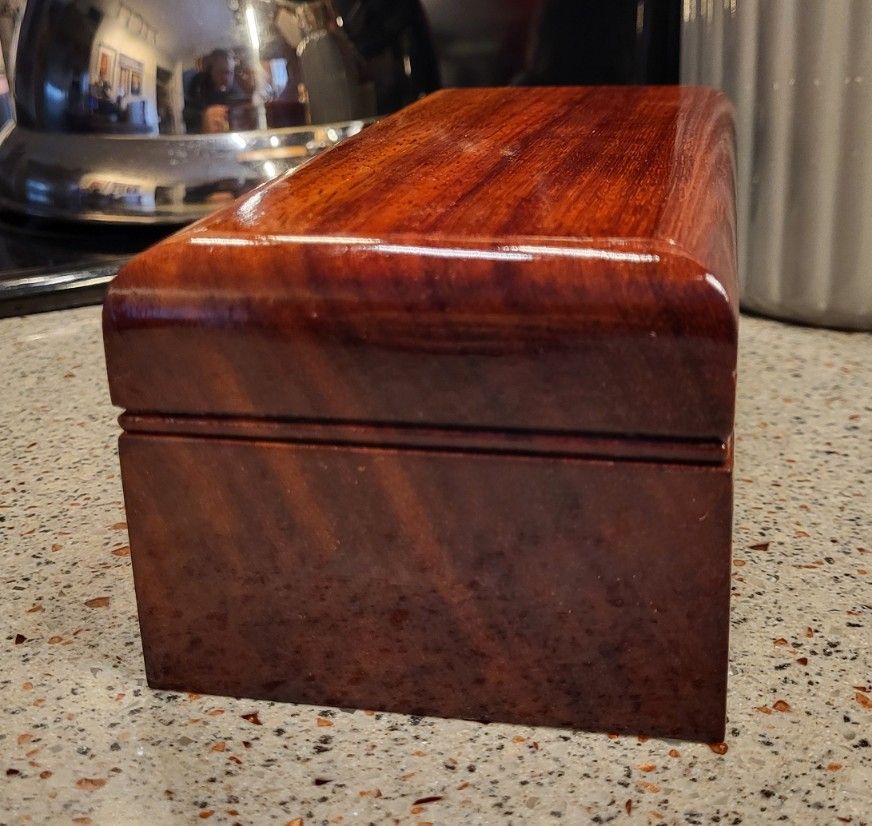
The ends are rounded over and the bead goes all the way around. I don’t scratch bead much and this curve on a wood that’s fairly hard isn’t trivial, so I had to sort of figure it out. There’s one other box that appears to be made of mahogany with curved ends online and when I first decided to try this, i took a closer look at it and the beads on the ends are pretty shitty. That box has interesting little carved details, and the maker of it was likely never intending to show pictures online. The trick to getting a beading blade to work across this was to sharpen the bottom of the profile to a point, otherwise it would just ride on the wood and not sink in. 
the filing on the rounded side that goes onto the workpiece- the left flat – is pretty crude and it doesn’t need to be totally sharp. the center, this is a tiny bead and I don’t have files that would do it so much at a reasonable angle to the profile, but a small chainsaw file held at a very shallow angle did a good job. Night and day. It will bead anything now, even some of the 3000+ hardness central American woods.
The varnish on it is not the full set of coats, and It’ll get as much again more along with some steel wooling or sanding to try to make sure it stays level. This varnish is set with japan drier so that it can be brushed on two or three times a day. Two if no light box or warm box, and it really could be brushed on four times a day with the light box. So, it looks a little funky because it’s right off of the brush.
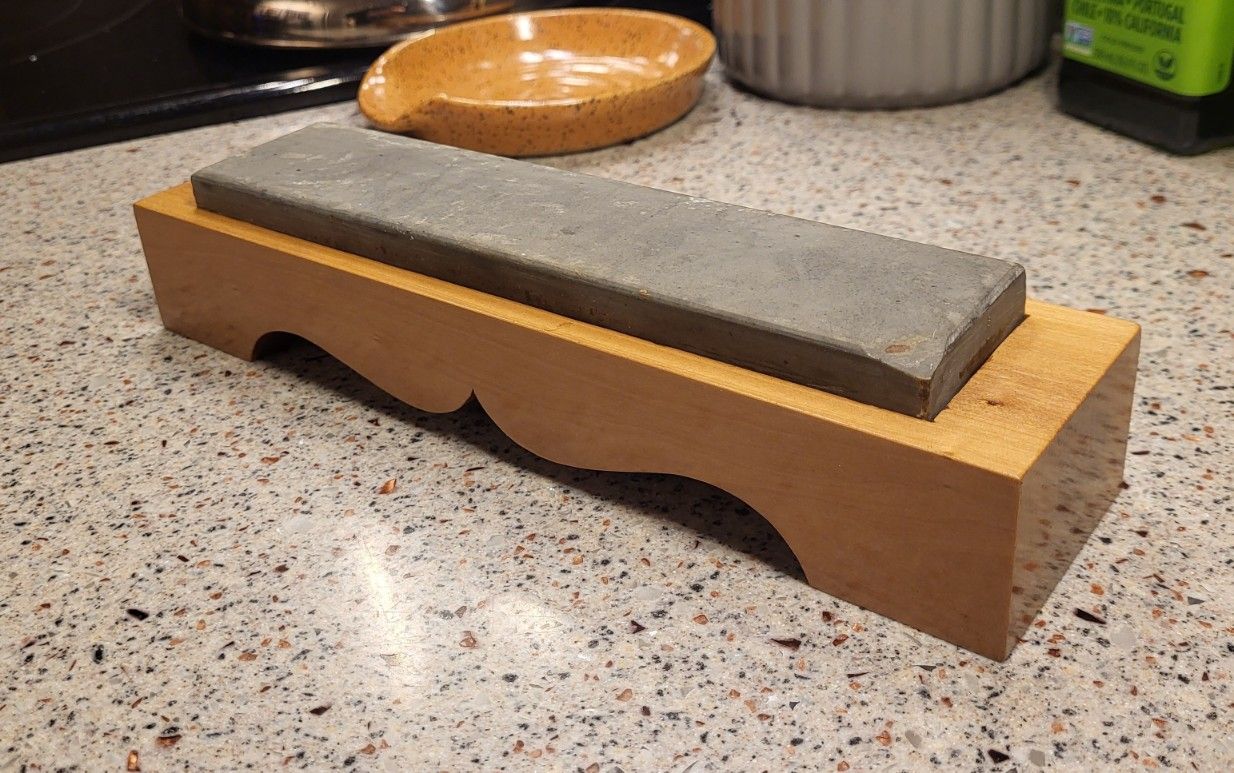
The stone housed in it is charnley forest. These all vary a little and this one like most is just OK as a finisher. It’s easy to see why hard arkansas stones took over for the few who needed them (dentists, engravers, some carvers) and the washita took over the end below them. They’re not a stone you need no matter what – they’re a little slow and most of them can take gouging with stuff like engraving tools. 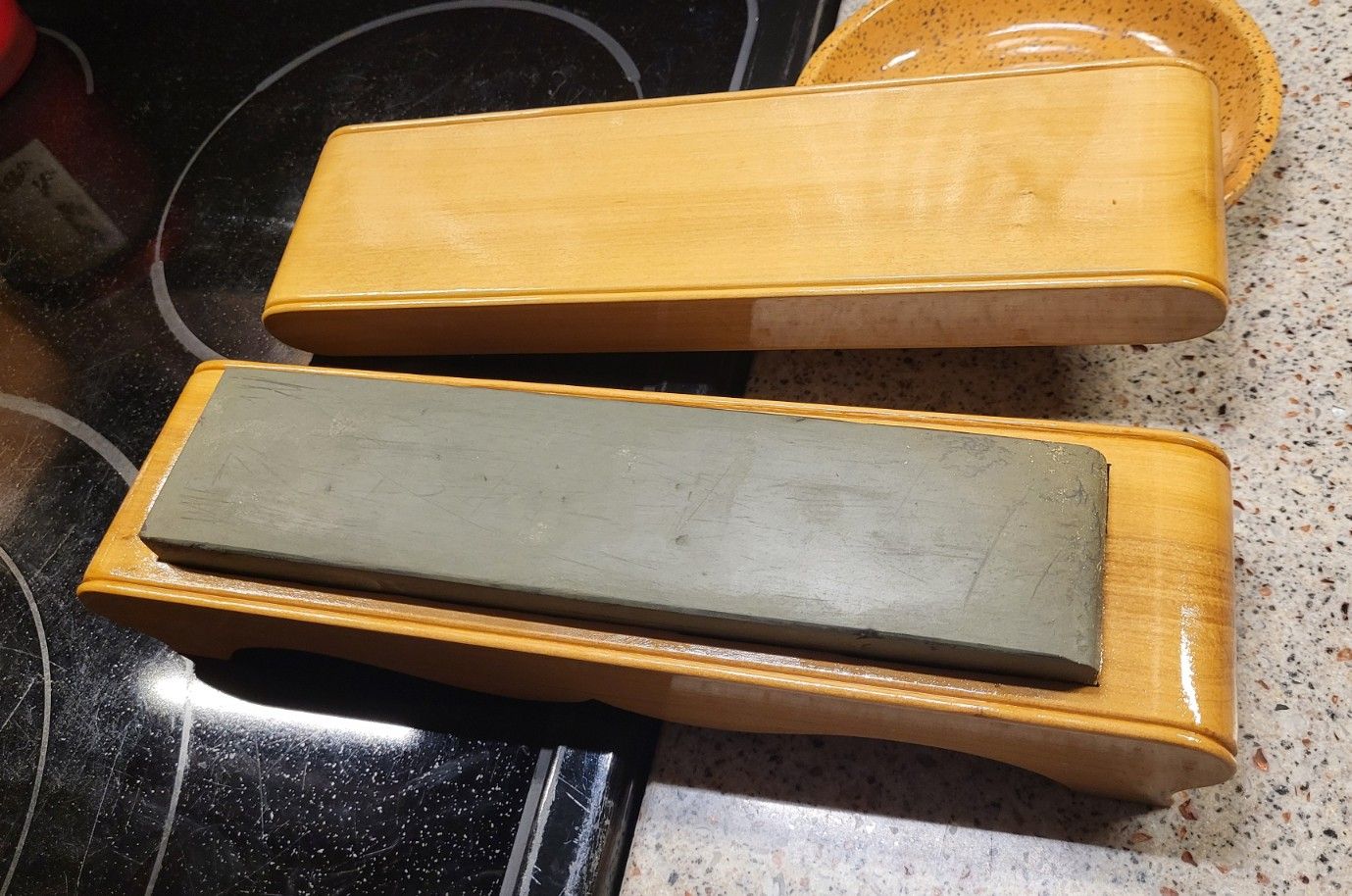
Years ago, I bought the two handled beader that Veritas made just because I was in that phase where you’re doing a little woodworking and buying stuff that looks like a good idea, which is maybe too quick. the beading blades for this thing are decent to start with, but the beader is good for something I haven’t yet figured out. it’s pretty much garbage for this box project and there’s a handle in the way of everywhere you’d really like to put your hands to make sure the fence never leaves the side of the work, a long lever to help you accidentally spoil a bead if the beader catches, and enough cast iron and fence stuff to both trap the shavings and stop the beader from cutting, and also increase friction to 90% of the effort you’re expending. 
I wonder if it was designed by the same person who decided chipbreakers don’t work. Whatever the case, I had to make a small very jiffy (fraction of an hour) stock to do the concave parts and then just turned to using it for all of the beading. It’ll be worth making a flat version of the same thing for more general use. I don’t think LV makes this tool any longer – which is too bad – too bad that it’s not lie nielsen where out of production means increased value.
So, What was my Diatrabe of the “Freds” About?
If you haven’t read the prior post, there’s no need to. Fred is a household term here for someone who doesn’t do anything, but always has an opinion on what you should do, what’s doable and how it should be done. There are polite well-intentioned Freds, but more common are the passive aggressive know it alls who really celebrate around them if nobody else enjoys themselves or accomplishes anything.
The last thing this hobby needs, or really any of us as individuals – because our intentions and wants as individuals are more important than the hobby itself. That should make sense – the hobby can be anything, but each of us wants to do something or nothing. The something could be making, researching, reading, whatever it may be. The hobby will be what it is around that. None of us has an obligation outside that. you don’t have an obligation to buy $1900 chisels or $200 router planes from China. You have an obligation to yourself – to figure out what you would like to do most and do it if you want. Very little of the information you get when asking or getting information unsolicited, will be useful to you, and most of it will be from people who are less qualified to give it than you.



 Of Making by Hand with Wood and Steel