…to screw this up. 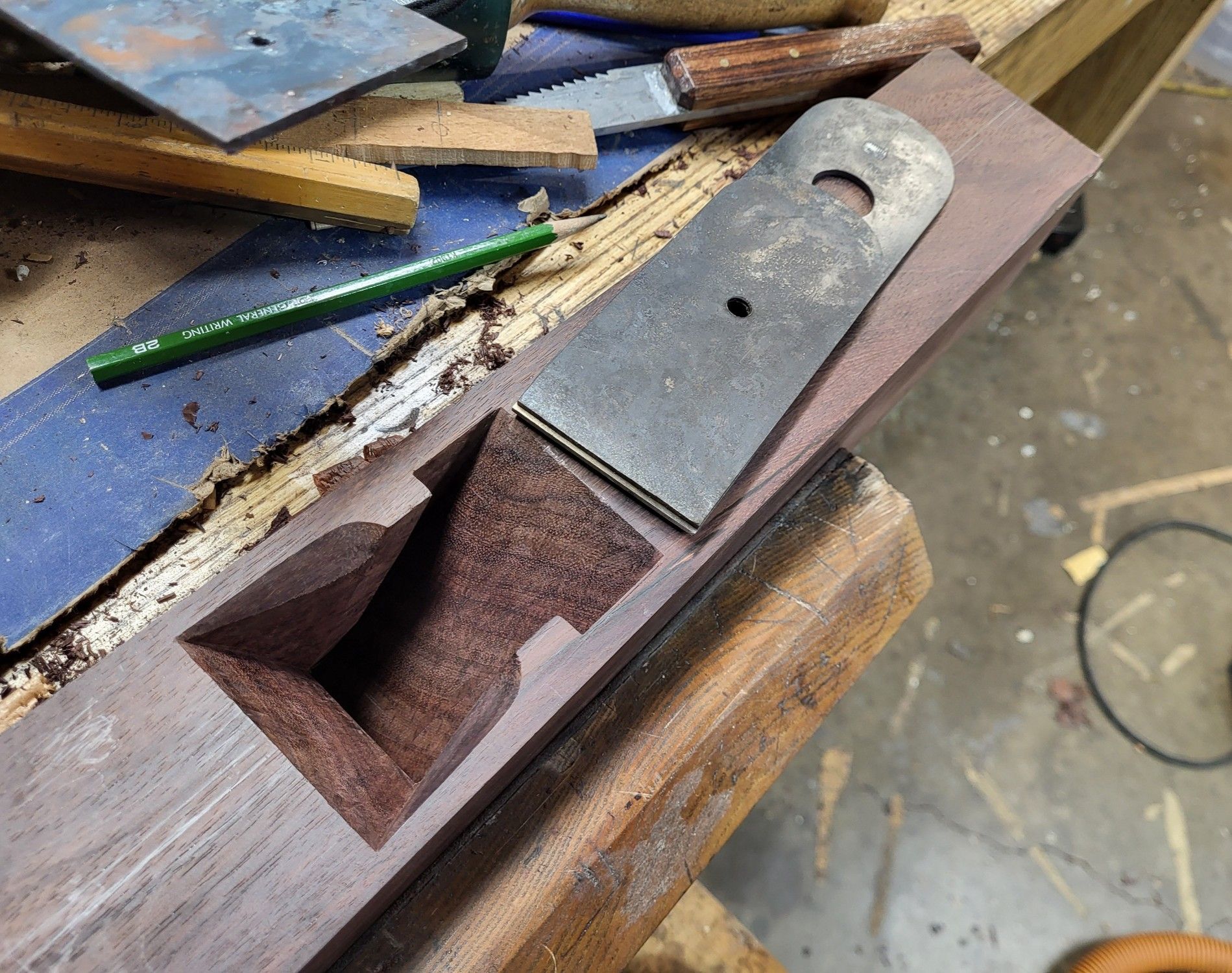
So, what is it? Obviously, it’s a plane. At one point, I thought I might make a lot of planes, and compared to the average woodworker, I’ve made a lot. Especially if usability counts. As in, I know a lot of people make an LV kit or a krenov plane or something, but I doubt they see 1000 board feet of wood and 100 sharpenings. I made those, too, they were just single iron more classic style planes out of whatever I had around and I ended up throwing them away.
Because of the whole chisel thing, I usually will buy turning blanks when they are a good deal. Last couple of years, I found 3x3x18 Indian Rosewood blanks for $40 if you bought 3. About half were dead straight and the other have weren’t. I couldn’t understand how they could sell blanks that cheaply, and the last time I looked, their website returns nothing. too bad.
this blank is straight in parts, but other parts not. I don’t make push chisels, so the wood really has to be used for something else. Really, you’d want a dead straight or certain specific biases to make a plane, but these blanks will be used as their fitness will allow. This one is probably good enough for an 18″ plane. By the time you square them, they could take about a 2.3″ iron. I’d love something slightly larger, but that’s what’s there.
So I’ll end up with a weirdo plane that’s 2.25″ wide iron, just over 18″ long and with a closed handle as I don’t need a jack plane. Too, I wouldn’t want a try plane made of rosewood, so this gets relegated to making a pair of smoothers (will do that with another one) or in this case, something that seems like it might have limited usefulness. A plane that can be used on harder woods when a 2 1/2″ try plane just beats the shit out of you. And if you have hardwoods with runout, it takes a lineman to do that with the same ease I’d do with straight wood. So that’s the point of this one.
The other point is to use some of my tools to make tools that I’ll use or that someone else might. I need to make a bathroom vanity and rather than being smart and buying one that’s on sale, i’ll make one out of solid wood instead, and varnish it.
Iron and Cap Iron
The other thing at play here is I’ve learned over the years to make stuff out of metal. Early on, Larry Williams told me basically that without spending $3k, I’d not be able to make a tapered iron worth having. He wasn’t saying that to be mean, he was saying it because that was his experience and his lens was making an iron like the blanks that LN sells – the moulding plane blanks at that time.
So many people told me that you can’t heat treat hand and eye that I’ve lost count.
Both of those made me want to figure out how to do them and then get good results that meet my goal. Which isn’t “i have to be better than everyone” or any of that kind of chest thumping, it’s to make something that isn’t obviously amateur done. When you use or sharpen an iron that I make, it shouldn’t have faults and you shouldn’t immediately think “well, it’s decent for an amateur”.
I’ve gotten to the point that I can taper a full sized plane iron like this one with a belt grinder and contact wheel accurately, make the back slightly hollow like the old ones and hammer out any straightness issues along the way (so forget a clean surface ground type look) in about 20 minutes. All told, the pair here took about 1 1/2 hours from bar stock to a little further along than the final result *and* I still need to buy the screw, so I can’t quite say I made everything in the whole plane. I’ll think about doing that another time as I can’t think of an efficient way to make a screw without a lathe, but I can think of a way to do it grinding down round bar.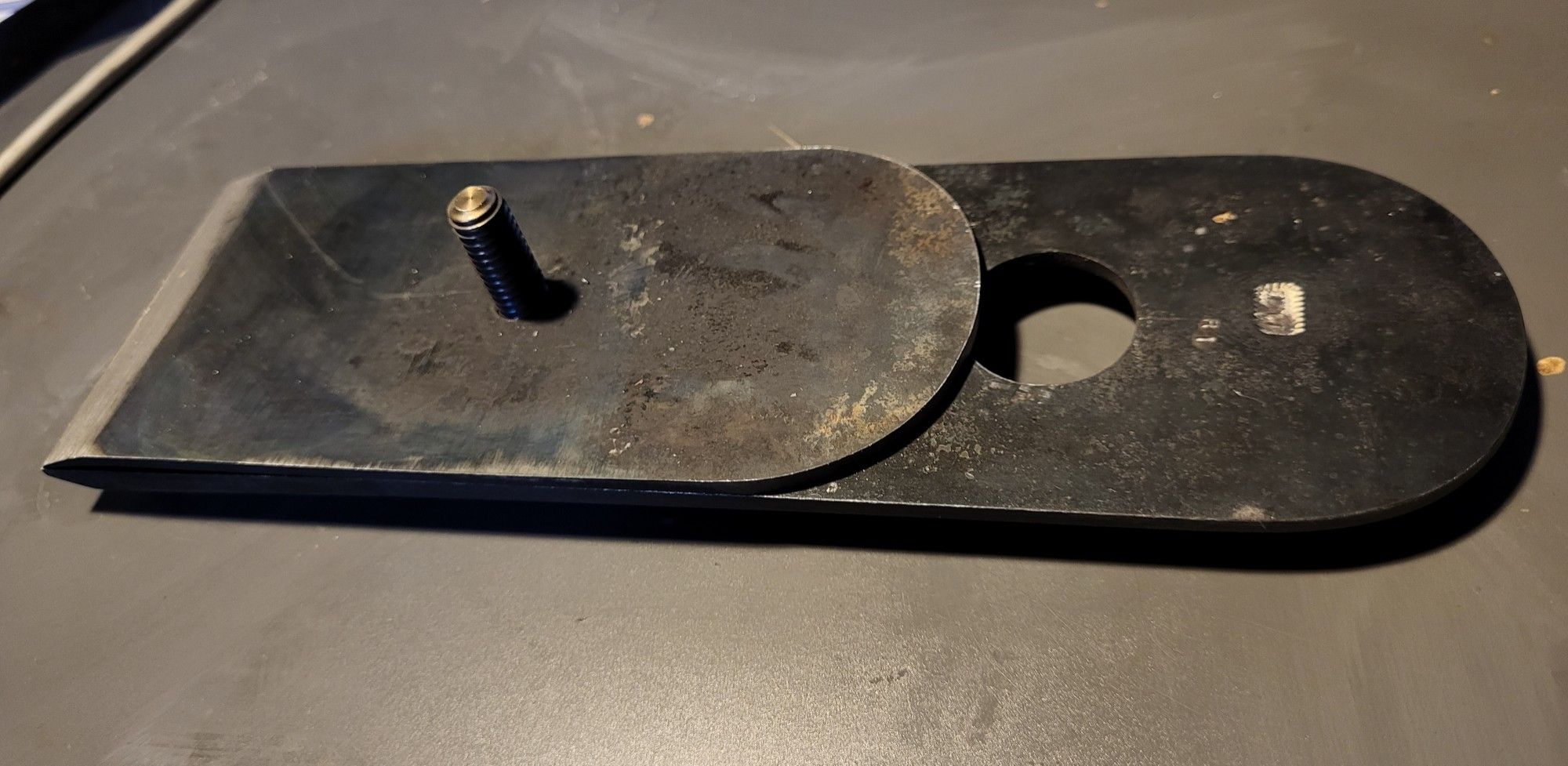
This is the shop made pair. The screw needs to have length cut from it, obviously, and I need to do some aesthetic things. With the oxide left on, I don’t need to consider grinding out all of the little hammer marks from adjustment – that part is nice, and I don’t think it looks bad. The carnauba wax stuck in the maker’s mark might be!, and the business end of the cap iron needs about five or ten minutes of bulk filing to get the final shape set, but we’ll get there.
This whole process also gave me the chance to harden the cap iron, which I like, but in sampling my planes, is only seen a small % of the time on older english stuff. As in, it probably doesn’t matter or it would’ve been done, but it costs me nothing more than five minutes of time with an induction forge and then a torch to blue the iron to spring, so I’m going to do it.
When this is done, if I don’t screw it up between then and now, I should have exactly what i’m looking for. The iron is 63 hardness 1.25% carbon steel, or maybe half a point harder, which is nice, and I’ll have a handle that I like and I think the wedge probably will be walnut just to start as it’s softer, won’t stand out too much and will have a little more give and grip.
Sometimes, it’s nice to make something just because the materials are on hand and it puts accumulated past experience to use. I think not enough of that is emphasized in the hobby – make something ten or 30 times instead of 1 so that you can do it better than you feel like your talent will allow. I don’t have that much talent compared to real makers, but you don’t have to make something unparalleled to be able to at least call it nice work. My work comes up short of fine, but “nice” is good enough.
 Of Making by Hand with Wood and Steel