One of the things on forums that’s not as popular as it used to be is for the “tycoons” to tell everyone that they have too many tools and said tycoons could build much more with 1/100th. Most of those guys turned out to be tax preparers or just frauds, but there are legitimate makers who aren’t fascinated with tools.
But I think there are more that are. I hope to be a legitimate maker when i’m retired, but who knows what direction life will go.
I still like nice tools, especially if they are pleasing to feel in use, efficient and nice to the eye.
I made a set of paring chisels for George a few years ago, and in return, he sent me these gouges – patternmaker’s and firmers:
The lighting is terrible – this is the transition from the basement to the garage, which I have completely …well almost both, claimed as my space. There’s bright light to the left, so this picture looks washed out. If you look closely, you can see these are practically unused and the handles are really nice for what is probably fairly recent marples work. Are they 60s? or 50s? work, I don’t know, but they are still hand ground bolsters with a brass ferrule.
George bought these, as far as I know, because of the look. The handles are a nice style, the stickers are in pretty close to perfect shape and they are beech with a divine sort of buttonlac color, but they’re not shellac. I don’t know what the finish is, but it’s durable, and the surface is completely pore free.
Again, sorry the pictures aren’t better than they are – the overhead lighting is bright daylight white LED. For whatever that’s supposed to me, getting pictures in real daylight always leads to better color, and these look better. Through some sort of anomaly, the picture at the top shows the tip looking like it’s not straight across. Whatever the case, it’s not like that – it’s perfectly straight. These are unused as far as I can tell.
The desire to do toolmaking won’t go away, but I want to get more familiar with removing wood with gouges – not just hammering, but doing all kinds of stuff, so I’ve excavated a few sharpening stone boxes for all of these japanese india stones floating around. Just crude square boxes – the stones aren’t expensive and the boxes won’t be fancy. I even did a couple of them with a makita plunge trim router. That was the shits, and between being surprised how fast bits dull, and smoke and whatever else, if it takes 1 1/2 times as long to make these boxes by hand, i don’t care. I’ll do it four times as many hours.
But not only do these look nice for such late tools, the steel is also really good. It is classic feeling and not the cut carbon steel that was popular at the time to run through automatic grinding machines. Why? I don’t know, but I’m glad it wasn’t changed. These are just like using an older vintage tool in terms of hardness and how they sharpen. I don’t have a great way to hardness test them because they are not polished on the inside. I did dent one of these quite some time ago, and it read something like 60 with the grind marks. Add one or two points, and you’d get to what the number would be with a polish. What a treat.
Oh…why the kind of grungy old Oak? it’s wood my dad had sawn by a local sawyer in central PA more than 40 years ago. It’s more suitable for 2x4s, which is what it is, and it’s had some bugs on the surfaces in the past, but they’re long gone courtesy of the wood being stored in a hot loft once we moved to the house I did most of my growing up in. I was struck by the wood laying in the garage loft, not knowing we ever had it – not because there’s anything special. Red oak is probably worth far less as a lumber log there, even a perfect log, than it is as a firewood log. The one thing that did strike me is how much better its sawn than commercial lumber you’d get at a supplier, and I’m sure it cost a fraction even back then of what you’d pay at any lumber or trimwork retailer. It’d be just super if we could get back to the idea that you could make something for someone else without trying to get 14 other skimmers involved between the falling and the selling to Joe Cool at 15 times the price at the stump. Someone in that long chain of people who really don’t care about the product, the ability for the person who gets the log and then saws the log to make something good is forbidden.
(after writing this, I took another picture of the edge – completely unrelated to this article other than for the picture part – but whatever has “improved” with cell phones since the days of something like a lumix panasonic hand held camera, it can be really bizarre! Current phone is like many with more than one lens, and I can no longer trick it to get things like the surface reflectivity of a nicely planed piece of wood, for example…
here is the end of the gouge:
same gouge as the second picture above – I have no idea what distorts the look of the edge above and makes it look like a big notch is taken out, but even the shadow at the edge from the buffer’s polishing work appears to be distorted.
Compensation run amok? Cameras always catch my belly and fat face – if there’s an error, I’d like to be able to bias it to distort those things for the better! At any rate, these gouges are just lovely. You scarcely find something that has never had an issue with rust – these sit in the cabinet that has the door on them and the shop itself is extremely humid in summer -often 90% or more, which you’ll never find outside on a hot day, but when you take that hot outside air with a 75 degree dewpoint, which flows freely through the garage door and goes through the basement, and introduce it to a 78 degree garage, there’s a lot of humidity. Not a spot of rust on these and they’ve been here for years. I waxed them when I got them and of course if they are touched, somewhere in the process is oilstones. It does make me marvel at the huge industry of spray oil and wax in cans that doesn’t do any better than routine materials, and often is worse.
Recall the origin of this test really was to see if the Zen Wu file steel chisel – which they refer to as “White Steel” with an alloy that doesn’t match anything from Hitachi – is what they claim in terms of spec. And, also, to see if it translates into something I’d see as familiar based on what I like about file steel chisels, and of course, 26c3, which is a cleaner version of a typical file steel. Cleaner not just in impurities, but based on the fact that the steel is remelted using the electroslag process.
It’s just nice steel to work with. Does the remelting make a difference in chisels? I don’t really know, but it does harden more easily at the same composition than another voestalpine sub company’s also super clean, but not remelted steel of the same composition.
At any rate, I think the Zen Wu (hard not to call it Woo based on their other offerings) chisel acquitted itself well. But more interesting was that chisel in context with a couple of mine, a Richter and a surprise Chinese chisel probably made by Luban. There’s no reason to discuss any thoughts on mine, so the others are as follows.
I don’t see a reason to get into any greater detail about the test results because of what I mentioned in the 2nd part: there are probably ways to differentiate them further and microanalyze everything, but all of the chisels in this test can do work, and I’d take any of them over highly alloyed chisels. Can do work is a little bit too much of a generalization – they are all substantially better than something like an aldi chisel, or even the Two Cherries or Pfeil sets I’ve had in the past. Why? Hardness – none were below 63 hardness. Any shortcomings each has could be overcome with very simple and minimal accommodating of the edges. So, with that….
The Woo (Zen Wu file steel chisel)
Bottom of this picture, of course. I forgot to measure the chisel itself, but if anything, it just suffers from a handle a half inch shorter than I’d like, and the shape isn’t a preference, but the gurus and copies of older construction chisels probably have folks convinced that you need to have somewhere to put your fingers against. Terrible idea. The basic forever-ago carver style handle on the chisel above is superior.
Hardness: 63.5
Fit/Finish: Relatively nicely made, though the handle is seated crooked. The issue with the tilt of the handle is cosmetic only and I didn’t notice any issues malleting.
Testing: Crisp through wood. Sharpens easily and is a very plain steel as it claims to be. Edge holding was good without the need for any follow-up testing. Better than the richter fared, but not quite as good as the mystery/probably Luban chisels.
Price: Individually, $70.
Thoughts in general: Given the origin, it’s expensive for what it is – it’s cut from flat stock with just a little bit of taper ground into it. The test chisel was hardened fully all the way up to the tang, which didn’t give me any pause, but it’s a straight in chisel and not one for any prying. The handle appears to be maple and is really light weight, but nicely finished.
Richter
Not a great picture, but you know what it is, anyway, and searching on google for it if you’re unfamiliar will run you into gurus and affiliate links aplenty.
Overall proportions are nice for a handle gripping chisel in chopping, which is important if you’re going to do substantive work. The blade is thinner than many others, and the finish work is nice, though it’s basically polishing on the long-done process of drop forging and then running a chisel through what is probably a rotary grinding machine, resulting in the step up to the turned tang/bolster area.
Unfortunately, this chisel’s grain appears to be slightly bloated, and in nicking off steel to get a picture of the grain, both the punch easily seemed to crack steel away and also the first test of slight edge with some unicorn resulted in the worst outcome. That result was mostly eliminated when testing against one of my own chisels just honed at a steeper angle, so I don’t anticipate anyone will have any issue using these after figuring out what they like. Lots of grain growth in heat treatment results in an unusable tool. Just a little results in one that’s hard tempered, which is how this chisel comes across. Will it match a chisel with a better heat treat entirely? No. Will it matter in use? I guess if you had something demanding enough, it might reappear, but edge damage from new users probably occurs far more from doing stupid things than it does from demanding wood.
Costs a lot less than the Wu, fared the worst overall, but again among a good group. Still worked through the maple test wood with significant damage because it’s hard tempered and doesn’t hold anything, but it’s too far into the hard tempered range to dismiss that, you’ll end up sharpening more off with that setup, and it really just needs more angle sharpening and discretion.
Hardness: Lost my notes already, but from recollection, also struck in several areas between 63-64 in different spots. It is a point or two less hard just at the step where the tang/bolster cylinder meets the rest of the chisel.
Price: $45
Fit/Finish: Nicely made. The ash handle is commodity feel of sorts, and the leather washer is dorky in my opinion, but some people like that. I don’t think a chisel with a hoop needs it. Compared to the LV pattern with the strange handle shape, and flat look, this is more in the territory of a chisel by definition to my mind and doesn’t just scream “flat stock, designed by white collar folks”. It’s a dressed up drop forged chisel that would’ve been outstanding if it had been pushed just a little less in heat treat.
I have no idea how these are heat treated, and this is the first commercial tool I’ve seen that shows some signs of grain bloat, but given the aim here, to get high hardness and then finish it off beyond that with cryo treatment, it’s understandable that someone along the way may have figured they’d go to the top end of the HT schedule or a little further to get some extra out of it. Cryo will not grow grain, so whatever the issue was, it was before that. Etching the grain to actually get sizes would provide us with more info, but I don’t have etchant and the etchant for steel is nitric acid in ethanol – if attention isn’t paid to the concentration -e.g., if half of the ethanol evaporates from a 5% nitric etchant, it can be explosive.
Otherwise, you could do a lot worse for $45. My opinion from having had a V11 chisel to test with for the unicorn article and then this chisel is I’d accommodate the edge on this chisel all day before wanting to have any V11 chisels on hand as a regular user. that’s without going further into the fact that you can get at least two of these for a single V11 chisel, and the ash handle will almost certainly hold up better in the long run.
Mystery/Luban
These chisels came from amazon, and are listed as being salt bath heat treated from 100cr-v steel. We still have not seen any reliable spec regarding what that is, but I suspect it’s something similar to what knife manufacturers in the US call “1095CV”, which isn’t 1095 anything. It’s a steel that’s still much more plain than anything you’ll find, though, and the Chromium and Vanadium additions almost certainly improve potential in a chisel vs a 1% steel like W1 or so called regular 1095. I don’t know where 1095 and W1 came from in terms of modern alloying, but they weren’t designed to make chisels as neither will match a crucible steel English chisel. At least this set of mystery chisels likely will.
This is a group from a set of six, of course. The handles are just terrible, as bad as anything I’ve seen put on a chisel. The one on the left is as they arrive and I reshaped the other two here.
After reshaping, they are still a little weird looking to my eye because of the steel cup instead of a straight ferrule, but that cup is probably there because it’s better for consumer chisels than a ferrule that would have to be precise fitted and then still may come off. The tapered cone isn’t just a cylinder of thin steel – the bottom is solid and the stub tenon on the handle that fits into it is only half of the length or less. It’s functional.
As mentioned elsewhere, these were $50 for a set of six when I scabbed them from Amazon. They’ll probably usually be more. The heat treatment is superb. A comment at the end of this – I am focusing on the heat treatment and how I really can’t see that it could be done any better, but that shouldn’t be interpreted to mean you can sharpen them at 22 degrees and mallet away. That’s not reality.
Hardness: 63 at the bevel and 64 an inch further up. Nearly full hardness up to the step where the grinding stops below the cone tang/bolster – not the cup that is, but the step on the chisel bit. I can’t hardness test any further up than that as I need a flat surface to test.
Testing: did better than the two above in the tests. The increment above the Woo isn’t enough that you’ll care in use, but we’re still taking about a chisel that’s about the same for six as the others are for one. The steel is “dry” and lovely to sharpen, as are the two above, it’s very plain, and the quality of the steel itself along with the heat treatment is in a completely different class than the run of the mill aldi or HF chisels. On this set, at least, I don’t see how it could be improved. Compact grain, good hardness, and to accommodate this to a point that it takes no damage would hardly take anything at all. Which could probably also be said for the woo.
Fit/finish: Well, the handles are terrible. They’re a hard don’t buy if you’re not willing to reprofile them or replace them with something of your own make. Otherwise, the chisels are not as well finished as the upper two, but they are surprisingly well finished otherwise. The lands are short and will not injure your work, but they are still there, which is important for corner durability. You will spend some time flattening a couple in the set even if some are close to dead flat, but they’ll be worth it in the long run if you are buying a set of chisels and using them on a regular basis. If you spend as much time buying and setting up chisels as you do using them, then I guess getting a chisel that requires no setup is important for no other reason than to prevent the rest of us from hearing how valuable your time is – because it certainly must be too valuable to do woodwork if that’s the case.
The handles are some kind of euro hornbeam. Don’t expect fas+ grade – there are mineral streaks or something here or there, but the wood is sound and it’s oriented correctly and should be durable.
Now – the heat treat fascination. Imagine you’re buying anything and you take a machinist with you. There may be something in the machining that you don’t care about but your machinist friend is smitten with and cannot stop talking about. When heat treat is dead nuts, I just cannot help by being impressed. But as much as people talk about heat treat having never done it, which is usually what you run into “oh, it’s the heat treat!”. It’s like listening to my dad’s teacher friends providing opinions about lots of things they’ve never done. They have a lot of little bits of wisdom that they have no actual practical clue about, have never done, and never would, and if you said “oh, ok, if it’s the heat treat – I have some pictures – which if these is bad enough that it will cause a problem and how can it be fixed?”. None know anything about that.
What it does amount is a chisel here that you’d expect to give up something on because of the price as far as the edge goes. Instead, it performed better than the others, is a delight to sharpen and grind and really provides a lesson in what it really takes to do good work in making a chisel that’s got basic function. The heat treat should be a dollar per chisel issue, especially if it can be done somewhere foreign, and what we’re really talking about is defective or not, or failing on a spec that just makes the whole result crap. A steel like this chisel that’s heat treated to 58 is a waste of time. It doesn’t matter what you say about how perfect the 58 hardness heat treatment is to spec, the chisel is a dog – it’s at a hardness more suitable for a hacking knife.
But the difference between a good heat treatment like the Woo has and one where I’m enamored is probably erased on a degree of edge setup. So I’m paying some respect to the fact that they did it right here, just the way I would do it, and I don’t always get it right, either. When the stars line up and you get a 62/63 hardness Ward chisel, let’s say, and nothing is left to gain other than aspects that don’t exist in reality, that’s where this one is. It will still depend on you to not fail, though.
And the last caveat: I have one set of these. Others have bought them. They are on amazon and can be mixed with others. Do not assume the same manufacturer will make a set like these just as dead on 1 year from now or whatever – we just never know. And don’t assume all of the chisels in a listing are made of the same steel. At the time of this writing, they are fluctuating in price, stock level, and sometimes even a saved link will redirect you to something that isn’t the same thing if the stock of the “good stuff” is gone. That’s the magic of Amazon – Amazon probably gets a service fee for sending these and then taking them as a return when they do something like that.
Which Would I Take over a Good Vintage Ward and Payne Chisel?
Probably none of these. The edge holding is probably in the ball park, but patient looking for older chisels can lead you to sets, especially if they are something like Ward but from a different make of the same era – for the same price as one Woo chisel, and nothing about the three above is as appealing to me in totality in use as something like a bevel edged Ward or really old Marples (octagonal bolster) or something else of the like.
But, those can be hard to find, and a good rule of thumb is to buy twice as much as you need in older chisels, keep the best half of what you get and resell the others. Most people don’t have tolerance for that, and the average newbie to woodworking will have no clue. I didn’t. I bought a lot of stuff I shouldn’t have.
I’m sure that won’t stop, but it’s less now than it used to be!!
I Excluded the Wheezing Ward Here
I’ll call it the wheezing ward because it has to have been made at the tail end of W&P chisels having an octagonal bolster on it. It’s just not finished as well, and two of the four that I have are soft on one corner, which I can only guess is due to piece rate demands when grinding.
Not the greatest picture below. The proportions are that of the good ones. the handle shape here is kind of pointless, but maybe it looked more interesting than the carver style. If you’re gripping them for use, your hands span the cut out area, and it has no function when pushing the chisel. It is a light chisel, though, easy to have in hand.
Ward was probably wheezing by this point in terms of making ends meet, like an asthmatic runner trying to stay ahead of the drop out line. You can’t really buy this chisel, but it was a match other than the corner softness perhaps with the exception of the 100cr-v chisel, but awfully close otherwise. If you’re looking for older chisels, I’d stick with something that has sharp edges on the bolster and tang and not spun/turned. There are likely chisels that have the later turned style tang that is thinner than the cone shaped tang areas on the chisels shown above in this test, or that look like the current Stubai chisels, but some are also just soft, and I have no idea how you can tell which are soft and which are not.
The only perennially soft older bench chisels of this era below, at least that I’ve seen, are Buck. And they must’ve done that on purpose, because their patternmaker’s tools and paring chisels aren’t soft. What’s soft to use for hardwoods may have been delightful for someone working in mid grade mahogany all day.
I had (have?) a little problem with sharpening stones. It’s not a functional thing for woodworking, though I am probably better at sharpening than I would be without having this little “thing” with stones, and the microscope, and straight razor shaving, and sharpening scissors and axes, and ….anything. Even plastic things with an edge.
But from a lot of exposure, I can identify what’s run of the mill and what’s not. And what’s absurd in price (cough…shapton 30k, anything new from harrelson stanley – my opinion….and so on) for what you’re getting. Not that you can’t make something expensive to make even if the core parts of it are not, but remember you, you can go to 0.1 micron diamonds at low cost and a full pound of linde close graded white alumina at 0.3 microns was $60 the last time I splashed out. it’s so fine that it’s not very dense – it sits in a big tub something like 1/16th of the density of the actual alumina textbook amount itself.
Over time, I’ve kind of lost interest in waterstones because I think they aren’t as practical for most people. They seem practical early on with a guide, but they’re …well, not very convenient for a point and shoot type sharpener with skill. What do they do so well that an oilstone won’t do? Cut fast? They certainly don’t cut faster than a silicon carbide stone with the right oil to flush out particles, and they don’t cut a huge array of steels better than sprinkling loose diamond on a natural stone. Have you seen a waterstone that properly cuts CPM 10V? I haven’t. A slow but wonderful feeling very fine oilstone will cut 10V making it impossible to see under the microscope that it’s even loaded with vanadium carbides that are much too hard for aluminum oxide to cut properly.
Before I go on – there are waterstone I treasure. they all came out of the ground, and in some cases, people have traded something I’m fond of, sold me something maybe they sold because of my excitement, or given in exchange for advice or services. So, on the very slim chance you’re one of a very few people who has done that, I have those stones. They permanently reside here, and I guess when I’m dead, people can figure out what to do with them.
So Why is this about King?
The prince of a King I’m talking about is this stone:
Looks like a ratty old oxidized king waterstone, right? It’s tan.
The writing on the back gives this up as an oilstone. it’s vitrified as far as I can tell – like a Norton stone. It’s also really fine, but I think there’s a skin on it so I can’t tell how fine. It’s in no way, shape or form remotely similar to a Norton fine india and I’m pretty sure I have an old stone that is a norton ultra fine or someone else’s offering of the same. Norton has a stock number for a UF, and that’s the stone we’d all like to have, but I’ve never seen it for sale during the period of time I’ve been a woodworker.
I put some oil on this stone, and once I started using it, the oil went right in.
In fact, all of the Japanese oilstones I’ve gotten other than the ceramic mug type stones that are like a Spyderco white stone have not been oiled or pre-oiled. I’m going to take a shot at that with this one as soon as Vaseline arrives. I usually stand my ground, so I don’t keep Vaseline on hand.
Put differently, these are oilstones, but they seem to be sold allowing for use with water, and they work like shit with water – not the good kind of it, either, more like about as well as a cowpat functions as a frisbee. With oil, they are wonderful. They have a “softness” to the feel that is kind of like soft brick, but other than the white ones in a subsequent picture, they have some feel. I think if folks in japan were not so averse to using oil in stones, these would’ve gotten some footing as an interim stone where there just isn’t much good anything in waterstones -especially natural ones. And yes, I have had huge pure white whetstone size Mikawa nagura. they’re really neat, but they aren’t better than a lot of things that cost $25.
So, what does this do for leaving an edge? After I get some vaseline melted into this thing and then just oil for real, it’ll probably cut a little faster. As it sits, this is what the back of a chisel looks like:
It’s kind of hard to judge that this looks like, but the nature of the stone is it’s touch sensitive. The flat area is bright polish – brighter than 8k. The edge as I see it has no foil without buffing or stropping, just light teasing off of the burr, but it does also not look terribly fine. Just really fine, and it shave shair, but by the polish and the tiny burr, I expected more.
I wanted to get a close up look at 150x with the metallurgical scope, but it definitely is designed for reflective metal stuff, and things like stones absorb a lot of light and this picture looks decent, but i’m sure there is detail missing due to the scattering of the light.
There are no large particles in it, but how fine does the picture suggest it actually is? No clue. Surprised not to see more pore structure given the oil will disappear in it in a fraction of a minute. I have coconut and palm oil on hand, and the palm oil at least is probably pretty stable, but I don’t want to risk soaking the stones with that as it’d be stable for a couple of years, but will it go foul in the longer term? I’ll wait for the Vaseline, but I’m going to make a box for this thing. Vitrified alumina at this level of fineness is not common. Especially in a group of stones that was probably about $100 including shipping from japan. There were about 10 in that group.
Some from that group are here, and some are from prior stone groups. When I was in the throes of buying and sorting and redistributing vintage natural waterstones, I’d get some of these types of stones as a side show thing. As in, for the most part, I never really paid for them in a sense – I paid what I thought the other stones were worth, and the overall average for these probably is $5-$10 per.
The four gray and white stones here are much like a spyderco stone but larger. the top one and the one on the right both are the same – just the front does not say “barber oil stone” on it. they are alumina, very fine, but also are very slow. I see these all the time, but they often look little used and I’d guess for someone used to a waterstone, the operation of them would’ve been confusing. They are a tip of the tool stone.
The prince of a king is in the middle and trials of it made the face filthy. That’s just the way it goes. It’ll be dark once it’s soaked, and look less nice.
Top right is a middle india type stone, also 8x3x1 in size, or thereabouts, and it’s marked 300 vs. the white stones #3000. it is much finer than a norton fine india, so the number on it isn’t meaningful in grit terms that we’re used to. It was, perhaps, relelvant to the old grit scale where 1200FF or something like that was a barber hone abrasive.
In the years after those early 1900s barber hones were made, something changed industrially regarding how fine alumina is made. Precipitating may be the right term, and fine alumina could be had loose. Before that, something like a barber hone must have a glazed surface or it will chew up the edge of a razor in a hurry.
Some of the other red stones here are oilstones, or probably designed to be. Some with a dry vitrified feel and some have a hard but muddy type consistency if you can get something with diamonds on them to abrade them with an oil lubricant. They will go out of flat but not remotely close to as quickly as any Shapton stone, let alone king. The only work of significance I see done with any of these is little grooves from someone sharpening gravers, awls or who knows what – something narrow and hard. obviously, waterstones are not much fun for sharpening gravers or carving tools.
How do you Get These?
I’d never pay a lot for these. You don’t know what you’re going to get- it’s more like a box of cheap stuff and then you see if any is good. They are around in japan on Yahoo (equivalent to our ebay), but someone could want $80 for one, and the next person may sell a pile of them in a group of 20 stones for $60. Beyond just not having anything to return if you don’t like things, you can get a real nasty surprise after you win an auction when you find the proxy services seem to have suddenly lost interest in surface shipping really heavy boxes. A $60 lot of stones suddenly will have air shipping charges of $200. No thanks.
I’d personally put them into a category of if you happen to see one cheap on ebay, maybe. Otherwise, it’s just fun to me to see what was made in different eras, geographies or both.
I’ve been pondering what to write about the conclusion of the very difficult to sit through and interpret info in the videos, along with the accompanying text. So, this post is sort of an intermission but also stating of a conclusion that I think is worth noting, and I’ll explain why below.
When I’m testing something, I hope to see something definitive or dominant. Dominant is a game theory strategy to me, because it’s one of the few classes I remember from college. A dominant strategy in a game is one where you will prevail regardless of how well your opponent plays, at least as long as you play to the strategy. Tic Tac Toe, for example, does not have a dominant strategy between two capable players. That was literally the first assignment in game theory – on paper (1997, for anyone young) – draw out all tic tac toe variations to find a winning strategy. I drew all of them – it was insane. I found no winning strategy and was really pissed figuring I’d missed it, because I struggle with basic executive function things and at some point in my life, it will burn me. I am pretty good at solving problems and contributing when someone else does the routine stuff, and then at least when I’m being paid, communicating what I solved and what’s important. Free writing like this, not so much.
Chisels aren’t tic-tac-toe, but I know the things that make for a chisel I don’t like. I also know what to do with any decent chisel such that I cannot sit here and tell you, for example, that I think the Richter has slightly enlarged grain, so you shouldn’t buy one. First of all, I’d have to buy a bunch of them to see if they all look the same. I’m not going to do that. Second, I know how to address minor issues with chisels at least several different ways. When I took the 52100 chisel of my own make and then the Richter, which fared poorly in the first test – noticeably worse than anything else, and honed a bevel of about 33 degrees on the chisel, it held up fine in what’s heavier work than most people would do (30 ounce mallet, red oak, 1/8″ bits malleted off). What’s to conclude? I could buff the chisel a little more without ever testing any of this and probably be pretty happy with it in use.
Nothing in this test showed up out right defective or out of spec to any significant degree, so the test is a failure of sorts, except to provide that information, which in a sense is a success. If you see the next Wright doing a test with some kind of string device and a fixed set of parameters, think about what I mentioned about the Ricther. Pushed to the point where all chisels damage, it takes a lot more damage. If that’s the only piece of data you get, you’ll think it’s brittle. It took exactly one attempt with a microbevel to get it to hold up fine. Both chisels held up so well that other than getting through wood a little more slowly, the lesson in the setup is 10 times more valuable than the test.
And something I know from experience, but didn’t have to deal with there by choice – a chisel that grinds slowly or hones slowly is a nuisance. A chisel that is too soft to hold a thin enough edge to not really be a lot of physical work in hardwoods is a real nuisance. We didn’t have either of those, so all of these chisels are fine.
The Zen Wu chisel is heat treated properly, it’s right around its hardness spec and the curiosity from the start here was to find out if someone would make an affordable file steel chisel. In relative terms, it’s that. The surprise is then that someone would make a chisel that’s probably better for $10 per, just with an abysmal handle, and I can’t help but say it, the Wu chisel appears to be a copy of something made in the west by LV and I just don’t like that. It doesn’t matter if it’s Woodpeckers or LV, I don’t like copying things even if it’s half hearted, unless they’re kind of public domain. copy a Ward chisel or an 1880 marples? As long as they’re not marked fraudulently, no problem. But to lift the design from LV for the most part? It stinks of either being tone deaf, or intentionally trying to shave some from LV’s coin via trade dress fouling.
I’ll still write a separate post with some aspects about each chisel, except I’ll leave mine out. They were there just as much for my own curiosity.
Lastly, before my conclusion – I thought it would be interesting to see if there is visible damage. There is. It’s harder to photo than it is to see it or feel it, but this is the scale of the damage we’re talking about from the pretty harsh looking damage in the videos.
Top to bottom 1) 26c3, 2) Zenwoo, 3) Ward , 4) House 52100. The 26c3 has less damage in the video, again I think the chisel itself has a lot to do with that, from the thin harder to hit handle, to spring, and even to the fact that with the same passes across the buffer, it will allow more steel to be buffed off even than 52100 probably by 25%. It holds up well, but it was 10 or 20% slower in strikes to get through the wood. The others here were about the same.
52100 is weird looking – while the other chisels show a white line of deflection, the 52100 almost takes a polish at the edge. It always does this, and I have no idea why – the damage is there, but the edge turns dark like that. it’s not an indication that it did better, it just looks different.
The other interesting bit here is the third chisel from the top – the Ward – is somewhat soft on the top corner and if you look really closely, you can see that the edge is knocked back a bit. That is where the big foil showed up in the scrolling video. But it’s only a small part of the edge, and while it would be a completely obnoxious situation if the whole edge was like that, it had surprisingly little effect if more than just that corner was in the cut. What it did do was prevent me from placing the chisel by handle and getting it to “stick” at a spot just before malleting. Stick just means you place the chisel and it doesn’t move. That littel deflection was enough to cause that issue and is a good reminder to me to be patient when grinding the bevels of my own chisel. I think I sent someone a chisel like that (Steve) and maybe it was just at the very edge, but it’s not hard to avoid and every issue I’ve had with temper or poor heat treatment has been something done in haste.
Since the Ricther came the next day, I didn’t get it in the above picture, but did take another one later. The 100cr-v chinese chisels came after this and I have no such picture, but there wouldn’t be much to see. This is the original test picture of 52100 compared to the Ricther. There is finally enough to see here that you can see some areas of deformation get away from the edge line enough that you’d have to do a good bit of extra work to resharpen. So, you would just set the chisel up so this doesn’t happen – that was easily proved.
The Ricther, is, of course, the one on the bottom. And it looks like the angle I had to take the picture somewhat disproves my statement above about the black edge on 52100. the little holes are dents from the hardness tester. the fact that the 52100 chisel seems to have a zillion on it is both from testing the results with it and then from doing another hardness test a few times because I did nothing to record the earlier results. it’s a mule, so it doesn’t matter. When I make chisels for other people, I try to get the hardness tester denting on the top side of the bevel before finish grinding, and it’s generally gone then.
So, Here’s my Thoughts
You’ll never read a chisel test that will tell you much other than some subjective things, unless you see chisels that are 60 hardness or below. If you work in hardwoods, you’ll prefer something 62+ as long as it’s a steel with enough toughness.
The rest of the charts and string tests, etc, aren’t useful. They’ll distract perhaps from the things you really need to know, which is what form do you like? If you pinch blades, you won’t like German chisels and probably not English tang chisels. If you hold handles, you’ll probably like English chisels a lot, and the more plain handles styles at that. They may look common, but they just irritate less than other handles.
There’s no reward that I’m aware of in any case, no matter what the test is, to seek abrasion resistant chisels for cold work. So any test that tells you that you need something that’s abrasion resistant or high speed steel for bench work is operating on some premise that the setup of the test shows a difference you’ll never see in educated work with a chisel. But you’ll notice that those chisels are a pain, and if someone is sharpening in four minutes with a honing guide, their opinion on sharpening time or method is not yet mature. And you can ignore it.
The lack of success in this test just goes back to why I don’t test chisels much – I think there isn’t much good information in chisel tests other than hardness and alloying information. It doesn’t take much to provide that info.
The answer to that, of course, is one single good one is enough. Good in my book would be a strong cutting stone as far as washitas go, as you can always allow one to break in and you can palm strop to hair splitting after some light pressure strokes. And then get beyond 8k waterstone type edges in ten or 15 seconds with something really cheap.
On another quick weekend home to visit my mother, who at this point won’t remember that I visited, but my dad definitely does, I stopped again at the “honey hole” along US route 30. This time, I didn’t stop for antiques, I stopped to pee, but I do have a want that I’ll need to fill eventually – one of the old cobbler’s lasts as I am getting to the point that I want to buy permanent shoes and boots and do my own resoling. Or have bought.
I have fallen in love with moc toe boots, perhaps due to being somewhat obese and aging at the same time, but also due to the fact that you can strip a sole off of them a couple of times and reglue another on before having to have the job done properly down to the midsole.
At any rate, I figured there’d be two in every flea market, but no luck yet.
However, there is a dealer flipper at this flea market who pulls in stones. Funny enough, I think there was a shapton grit like japanese setup with a kanaban, all complete for about $15 and in great shape, and there’s a host of would-be useful finer india stones that I just don’t need because I’ve got a lot of that stuff already. Everything stone-related there is cheap, and so is basic component stuff, like the hardened starrett or mitutoyo rules that are matched to heads. There are so many that you can quickly get three together and check that they reference each other proving that they are lightfast. One of the things I’ve wanted to do for a while is get another starrett 24″ straight edge, but I’ve got 36″ and 48″ beveled starretts and just can’t justify being so lazy as to spend another $140. I guess I could, just won’t.
The 24″ hardened rules are awfully functional and there must be ten of them in little or unused shape for $35 each. I got one last time I was there.
Short Story Long
Never found the shoe stuff, don’t need more straight edges but the oversized washita above with a corner broken off was $6. It’s more than an inch thick, also and before cleaning it a little, I could see enough to know it would have a nice texture.
Just under 2 1/4″ wide
Just over 8″ long
There is a lid for this box with leather so old you could scrape it off in dust. No problem. if you look closely, the right side of the box is not original. It was missing. I put some kind of exotic on the side after flushing off the broken bits and glued it, then pigmented it and put shellac on. It looks less of a match in person, but it’s a $6 stone.
I also managed to find that the seller had bought gobs of finger stones. I think for a woodworker, these little stones will seem pointless. If you’re making tools, though, and you can find all manner of little really fine synthetic oilstones that are a little friable, they are gold for surface finishing little stuff. But they’re not that inexpensive once you start adding piles of them to a cart.
In this guy’s shop, they’re $1.25 per.
I haven’t got a need for this stone, but like pizza, I just want to see if this one is a little better than the ones I already have.
A close up look of the color at the top and bottom of the first picture is a better indicator of what this stone will look like. It sound stupid, but I really like the way they look. The color, to me, is “earwax”. not sure how else you’d describe it, but I find the texture and the color monstrously pleasing in a way that a normal person may not get. It was almost flat to start with – this is five minutes of lapping on worn out paper that was already in line to get changed off of my glass lap. A little more should have the entire surface looking like it does here.
Plenty of things are no longer on the ground, but the little finger stones, I find with some regularity. Washitas and other naturals, not quite as much, but sometimes, and my very favorite of these as far as cutting goes have all by some chance been unlabeled stones that have this kind of appearance.
This is what I did to test chisels that are shown in the videos on page 1. Again, every time I talk about those videos, I have to apologize for how hard they are to get information from and when there are six relatively good chisels, how little you can actually do to ethically say “this one is good and the others are terrible and nobody could work with them”. We didn’t include chisels like that. The most highly alloyed in the whole test is 52100, which is similar to O1 in terms of alloying mass, though a little different in flavor. Everything else, though not tested XRF, is by feel, more plain. I can vouch for 26c3, but the India stone communicates how plain the two Chinese chisels are and how plain the Ricther is. All three are steel with additions for properties, and not additions for wear or to impart really high toughness like 52100.
But regardless of that, here are the details:
Sharpening
Ground flat bevel at 23 degrees on adhesive backed paper wetted to prevent any heat issues
Honed at a very slight lift on fine india and “Dan’s hard” a less than ultrafine stone, but still fine
Buffed tangentially three passes for each chisel, which protects the edge a little bit but is not the full unicorn treatment.
From a later trial, this is much more protection than something like a 25 degree angle, but less than 33 or 34 degrees.
The Test
30 ounce verawood mallet wrapped with horse butt.
Red oak, flat sawn , so quartered orientation at the edge. Each chisel mallets two separate blocks of wood 3/4″ thick x 1 1/4″ long by 1 3/8″ deep. The wood is marked every 1/8th inch to make sure the malleted leaves removed are even.
Malleting is done briskly, but it is not intentionally harsh and the chisel is not allowed to bounce or wobble while being struck.
The work is straight in, with the waste side forward and bevel of the chisel forward.
The first cut in each leaf is the same corner of a chisel embedded. Meaning 3/4ths of the width is chopped off of the test piece, and then the last quarter is chopped off with the same side that was already in the cut. This is important to identify corner issues that may not show up in a test where corners are never in the cut.
If a chisel is wider than needed to perform the prior bullet point, the excess width is not contacting wood anywhere in the test. that means the same working length of the edge on each chisel should do the same amount of work the same way.
Two separate cells are chosen and each chisel in the “core four” works one cell, an then the others do, and then this is repeated once more
That’s it. I strike all of the chisels the same, as you’ll end up doing if you’re a hand woodworker and with experience. Work is in rhythm and much the same within a task.
Red oak isn’t terribly hard on edges, but it’s not easy on edges like cherry or mahogany. It makes a good test medium because it’s hardwood and not something abrasive but not hard or hard to the point that the stock is rarely used. For example, this test done with gombeira or katalox would’ve provided damage at even normal setups, but it’s not useful in general to do that because people hand working significant amounts of either of those are rare. Damage that occurs relatively so in katalox isn’t necessarily predictive of damage that will happen in cherry or soft maple. Even in relative terms.
A Control Check
Richter and 100cr-v Chinese chisels were purchased after the “core four” were tested, with the Richter test being done soon after, but the latter being done long enough later that the sharpening feel wasn’t fresh in my mind.
The Richter test is worse than the others notably, at least in the more aggressive setup, but the results are in line with how easy a section of edge was punched out, as well as what appears to be slightly enlarged grain on a relative basis.
Because the Richter results were so disparate, I honed the 52100 chisel and the Richter chisel in a honing guide to an angle that is 34-ish on an old microebevel contraption that I have from long before 2010. Nearly all of the gap between the two chisels disappeared at that. For this kind of work, that sort of edge treatment isn’t unreasonable, though it was less easy through the wood than the original test edge. Very little damage occurred in either chisel in that case.
I see this as confirmatory, both in confirming that reasonable setup efforts negate needing to pursue an ideal, as well as confirming that when absolute damage levels change, so too can relative differences.
By this, I mean that when you see someone online performing any test, even if it’s in a machine, and you see large differences in results, you should request that the person figure out what setup is needed for the performance gap to close. if it never does, one chisel is better than the other. if it closes with a few degrees of adjustment, you may still prefer the chisel that didn’t “win” the initial test. A real-life example of this is my start at mortising plane bodies. I wanted a chisel that would hold up the best and bought an expensive japanese chisel (Imai). The Imai chisel didn’t hold up very well in actual work compared to a stanley or PS&W chisel that just had a couple of extra degrees of bevel. The Imai chisel would’ve won a chisel test pretty easily where a fixed angle of 30 degrees was used just because it’s harder. It took far less long to do the work from one plane to the next with the stanley and PS&W chisels because while they didn’t hold up at a lower angle, they held up fine at an angle that the Imai chisel also needed to hold up mortising beech. And took much less time to sharpen. That actual act was probably the first step toward unicorn, just modifying the tip of a chisel a little to see what would happen and finding out how little it took to stop the damage.
There’s an urge to describe everything about the test here before discussing results, but I think I’ll leave that to the end. Before getting into the details, one thing was pretty clear from the 6 chisels I tested. All of them could be set up to take no damage without trouble, even though at a specific setup, some perform better than others. The gap between the worst and the best does not remotely approach having to deal with a chisel that’s soft and rolls. None of these really do.
That also means coming up with a realistic way to show failure rather than a “bess” tester and some arbitrary nonsense, I had to set the chisels up so they’d fail a little, and ignore setting them up so they wouldn’t. The whole unicorn thing covered addressing edge failure, but also did include that it doesn’t have to be a buffer doing it. You can, if you choose, just continue to increase bevel angle a degree at a time and on any good chisel, the difference between the best and worst of good chisels will probably be a degree or two.
So, I attempted to do something else here because the damage created by the test is relatively universal at the edges, but it’s also almost impossible to get a “here’s a typical picture, here’s the worst and here’s the best part of the edge”. I could do that, but it’s really subjective. So, instead, I attempted to take video of the edges being scrolled, and doing that is…really difficult. The chisels aren’t dead parallel to the microscope lens, and I have to move the chisels laterally but the platform on my scope doesn’t really allow for setting a chisel entirely on the platform – the end has to sit on something off of the scopes platform, and that gives us a combination of some things. Those include the edge going out of focus as the chisel is scrolled due to changing distance from the lens. The edge wanders sometimes away from the center of the lens – so while we’re scrolling along the length, it’s attempting to move laterally off of the screen, and the scope’s software is attempting to auto correct light – which works like shit. This scope is ideal for taking static pictures, but the videos will be really difficult to watch. So, the results don’t suffer the same ills as taking pictures and cutting test wires or whatever, and getting a bunch of data that may not be worthwhile, but observing the scrolling and having the software for the scope make judgements is challenging.
Before describing the details of the tests and the chisels in greater levels, I think one blog post with the videos will be fine. They’re all malleted in the same wood with the same mallet at the same striking force, and sharpened the same way. No chisel has its original edge. I’ve nicked the chisels that aren’t mine – think BB sized nicks, not sand, and then ground the bevels back and re-established an edge so that we are not dealing with an overheated edge from factory grinding that throws off the test. It’s my opinion that if you have to grind off more than a tenth or eighth of an inch of a chisel to get to good steel, the chisel probably shouldn’t have been sold.
There are six chisels:
1. The zen wu “chinese white steel” chisel, lighter colored handle here, more or less a copy of the Veritas chisel design in a file steel at 63.5 hardness by my tester:
3. The Amazon Chinese 100cr-V chisel. Not an amazon product. Struck hardness of 63 to 64 on different parts, handles not original in this picture. Tested chisel is second from left.
4. A later Ward cabinetmaker’s chisel. Struck hardness of 61.5 – some length of this chisel’s edge on one corner is not as hard, presumably an artifact of the grinder overheating the chisel.
6. Thin 26c3 Chisel, one out of the group on the front page of this site, though this and others have been ground a little thinner since that picture. 65 hardness.
While I think you will have a near impossible time viewing these in general, a few comments are in order: First, the screen in the video is about 0.019″ tall. Damage that resulted in nicer use generally correlates with less deflection. Nothing survived without significant damage, and the details in a separate post with comments about each chisel and then more description of the method will illuminate why. I hoped for more separation between the various chisels, but finding the point on purpose where one or two of the chisels hold up and the others fail is just making fake news, so to speak. If it happens unintentionally over an array of conditions, it’s good data. But if nothing really stands out here, that’s better data for you.
I didn’t pick garbage chisels – these are all pretty good. At the aggressive setup of the edge, the Narex fared the worst but did OK in a later comparison to the 52100 chisel with a more robust edge. The 26c3 chisel fared the best, but it is thin and somewhat sprung and it’s pretty hard to hit as swiftly because the handle is smaller and less flat on the end. It’s probably ever so slightly technically more capable than others here, but not in a meaningful way. We are comparing for the most part, chisels that are 63-65 hardness, and nothing on the warm butter end of the hardness spectrum. In my opinion, the Narex both nicking the edge out to get a picture of the grain and in use shows some issues of hard tempering and minor grain enlargement. This is a surprise, but aside from using these chisels for mortising and prying – something none of them are really made for, the hard tempered nature is solved by not much edge accommodation.
Lastly, I tested the Chinese chisel -the amazon obtained cheap set – on a whim at the end – days later. The first test, I ended up setting the edge up a little to well and the chisel didn’t show any damage before I did the test video shown here. I just forgot when setting it up and gave it too much buffer angle. If anything, the second iteration was a bit cautious on the buffer, and the results are worse than they would be if I’d have been able to sharpen it with all of the others but the Richter. the Richter also was an afterthought, but it arrived if I recall, the day after the first test and while the damage was catastrophic, it was set up like the others. I then ran a separate test later with the 52100 chisel because it’s one thing to say it performed worse than the others with the initial setup by a pretty wide margin, but another to exclude information that it didn’t take much to set it up so that it held up fine. If you’re pretty conservative with edges, I think most of the time, you’d like the chisel and certainly I’d prefer it over the V11 chisel I tested in the unicorn test article on wood central.
Of course, I hoped my own chisels would be a measure above purchased stuff, but that’s not really realistic, and even getting a mortise chisel made by Kiyotada relatively late when his quality had really gotten dialed in, you will find that the difference between such a chisel and just a really good one found used on buyee is not that much in the steel. It’s the little things that make you prefer it – you’ll still have to sharpen it, and if you’re aggressive, it will still fail at the edge.
Looks like we ran the 10 or 11 sets of the chisels that were on amazon out of stock. I figured I’d mention this not because it’s notable that we did that, but because when I returned to the link this morning, the set of 6 is gone from the listing.
What Amazon sneakily does is route you to the 60crv aldi style chisels for $36. That’s a no go – those are $15-$20 chisels and not something I’d want for bench work.
So, just a word of caution – if the listing doesn’t say “100cr-v” in it and mention a salt bath, you don’t want it.
Set of 4 is still there for now.
Separately, looking around at other places, I see that 100cr-v is listed for a bunch of woodcraft flips. I call them flips because these kinds of tools are a flip for a tool dealer. Buy something, mark it way up, flip it. Unless we’re missing a big product development effort, there’s not a whole lot there.
Woodcraft has socket chisels with handles that appear to snap off, but they’re asking $45-ish per (!!) and of course they’d like more than twice as much for what may be the same chisels with the common looking bubinga colored handles. As in, their tang chisels might be the same as these, but the reviews would suggest QC is an issue. Of course, most of the people buying woodcraft’s house brand products wouldn’t be able to communicate if the chisels are better than most others at edge holding or not, so if they do have the same edge holding qualities, it’ll be lost on people who are trying to flatten backs with media intended to be paired with a honing guide. It’ll be rough going for them.
Work has been busy and my primary deadline for stuff – or one of them – is October 15. Anything I need to get done right away is really drop dead date of tomorrow, and aside from some other things that are part of life (busy kids and ailing parents) fall may provide a chance to get in the shop more and do more than one-off irons and grinding chisel handles.
Until then, don’t buy the wrong stuff if you do buy! I’d guess someone made the princely sum of $100 profit or so on the ten sets of chisels sold through amazon. Mind boggling.
And no, this isn’t clickbait. Because there is no revenue here and there is no incentive for ego stroking. At least I don’t think there is, but maybe ego prevents us from being self aware? If I were more confident in general, I’d consider it!
So, I’m done with the chisel test. But this isn’t that. Legitimate chisel testing is a puzzler for me because I can take any chisel and make damage stop. Anyone with experience can. The challenge comes when you decide what the setup will be to allow some damage to occur and then the results are disparate, sometimes surprisingly so, and you know that it could be just test variability or chosen parameters. So you adjust the setup, let’s say, of the poorest performer and compare it to another chisel that did better, and the results are much closer. Which is better, then? In reality, you’d take the performer and maybe use it either way, and the chisel that suffered in one test and set it up such that it succeeds.
I tested five chisels – two of my own for familiarity and then three industrially made chisels.
The subject chisel in this case that struggled wasn’t the Zen Woo file steel chisel – it did fine. It didn’t “outperform” but it was pleasant. the chisel that struggled in the original test was actually a Narex Richter. After accommodating the chisel with a little setup, it was just fine.
But the Shock
The shock is that aside from terrible handles, a 1% cr-v steel Chinese chisel that John C mentioned to me, and I found. John, if you sent me a link to it and I forgot, pardon – i can’t remember exactly what I did to find it other than confirming your wife’s account did a chisel review and I knew I had the right thing….
Anyway, that chinese chisel, 6 for $50 performed as far as I can tell as well as anything I have. And it may match my baby or pet formula, which is 64/65 hardness 26c3 chisels. The variability of results makes it hard to tell.
Before I go into details about why these chisels are exactly what I’ve tooted off about in the past (“if someone would just use a 1% steel in China with some chromium and maybe vanadium addition and put a dollar’s worth of effort into each chisel at local costs, they could make a chisel that would blow away Veritas V11 chisels for a few bucks”) …..here’s what they are (link temp. disabled – they’re out of stock and amazon automatically opens a window with a different set without notifying you the link isn’t what you clicked on…how unethical). There are several sets there, and these are labeled “6 piece” and have “100cr-V” in the description. I’m sure some of the other sets in the listing that are cheaper are 60crv, or “aldi chisels” – there is a huge difference between the two. Huge.
Note, that is an amazon link. Not also, it is not a revenue token link – you know I hate that. If you’re hoping to float to amazon and have a charity get a commission instead of this dry link where nobody does, then go through your charity of choice after you find the set in this link.
These chisels test 63/64 hardness on the pair that I’ve tested so far and they are so close to perfect heat treatment that I’m completely astonished. They are exactly what I would do if I could manage to find round bar stock in this stuff to even make a chisel.
Here’s the caveat, or caveats. These are made with a relatively automated process, I’ve got one set, the handles are absolutely terrible and you cannot live with them and will need to reprofile them and even if you get a set that is everything mine has proved to be, they are not perfectly flat.
I cannot state how bad the handles are and cannot grasp that until or unless you grasp them in person. You should not consider them at all if you aren’t willing to address the handles.
I’ve tested a V11 chisel before, by the way, and also had both house made XHP stuff as well as Veritas-made V11 irons. For application in bench chisels, there isn’t a V11 chisel that will touch this set. Not in edge holding and stability, and definitely not in honing or grinding. These are super plain steel, the grain is very fine and the edges are wonderfully stable.
The finish all in all is really good outside of the handles, aside from the quirk that they have very crisp side edges that you’ll need to address if you choose to buy a set.
So, how do you deal with the handles? There is so much wood in the originals, they can be turned into carver style handles just using a coarse sanding belt to round them into a carver style handle. I ran these around rotating until they felt round – just matching taper to the ferrule and to what looks right to my eye. I’ve made a few hundred carver style handles, so you’re on your own if you think this is harder that I’m guessing it might be. There’s plenty left, though, to the two here that are reshaped.
and again, how terrible the original handles are in shape- they are also flattened on the front. imagine a knife handle that is indexed 90 degrees from the way you’d like to hold a knife – that’s what they feel like. I know nothing else about them other than use so far, so if you destroy the handles should you buy a set, I don’t know if the tang is of appreciable length or if they are “just got out of the pool” length and need something like hornbeam to hold up well.
They are not going to be chisels you’d want to use making mortises, but chopping and push paring, they are divine once the handle is addressed, and they exhibit the sparky fast grinding and the sublime honing properties on stones that steel that is plain and hardened and tempered ideally exhibits.
I’m shocked.
Oh, the handles:
As delivered on the left, and after sanding/grinding off the excess wood on the right two. Boring hornbeam made to look a little more “lifey” with limed tung rosin varnish.
If they were delivered any harder, they’d have hard tempered behavior. if they were delivered any softer, they’d be less good.
The 59 hardness claim in the ad copy is humorous – if you heat 1% carbon steel with a small chromium and vanadium addition to a hundred degrees past critical temperature, you just aren’t going to be able to get anything that soft. I wasn’t deterred by their claims, but the key language in these is that the ad copy says that they are heat treated in a salt bath. This is not a random comment that you’ll see anywhere and salt bath is, as my guitar teacher used to say, “tits”. Flashback to the 80s when I was 12 and he said something “great”, concert was “tits”. it was just as confusing as the old people talking about tubafirs or tubafours. Maybe these are the cat’s ass instead (yeah, who knew if that was good the first time they heard it, too…especially if you ever had a cat back up into your face leaving you scrambling to get away any way you could).
Thile we’re at it, because I took pictures, have a look at the steel magnified for the test – I gotta look. this is an intentionally chipped out section of first the Richter:
And then the Chinese chisels:
Same magnification, same scope. What do you see? The shiny part at the bottom of the Richter, ignore it. It’s probably shear. However, notice the light colored glints and the overall slightly higher coarseness of the richter picture. these are at 75 optical, but even stuff that shows up there isn’t “too small to make a difference”. The odds are the bright glints are facets of larger grains. i’ve seen what carbides look like at this magnification – they look like tiny fine stars like the little white dots in the picture below.
I think the Richter is slightly overheated, and that would explain why it was so intolerant of not being set up with a little more concession to edge holding.
This is sort of a surprise, but this is a level of grain growth that you are not likely to be constrained by if you start heat treatment as a beginner – you’ll do far worse. In my opinion, and that’s all it is, we shouldn’t see the enlarged grain artifacts in that picture and when I see grain like that in my own chisels, I generally find someone to give a tool to or toss it if it’s not in a condition that the grain cycling and heat treatment can have another round. that would be something like a bevel chisel fully finish ground -there’s too much bevel surface to have another go and get high hardness without warping.
I do not think the carbon level in the richter chisel is any higher, and both steels feel very plain on an india stone whereas something like 52100 or O1 does not.
Please Don’t be a Dick
I’d guess most of you will find this interesting, few will buy these chisels. I hope they restock them at some point without changing anything because I finally can recommend something to people who want their first good chisels. I could even spend an hour reprofiling the handles on 6 of these as a gift for someone and perhaps make them unhappy with later “premium” chisel purchases like Blue Spruce A2 or V11.
If you buy a set, I hope everyone has the manners to not gobble up the group and leave everyone out to dry.
Why am I even concerned about that? I don’t think the market itself will realize what we have here. There is truth to the issue of chisels being in a handle format and proportions that you really like, and that ergonomics are important. Do I think a new engineer or doctor on sawmillcreek will have any clue just how much potential is here if they stop checking themselves in the mirror and just fix the handle issue? probably not.
Is there an incentive for a retailer to do anything with these chisels? i don’t think so – what do you think the margin is on a set. $25?
And beyond even that, what are most people who buy chisels at aldi or harbor freight going to do with the chisels? They’re going to scrape grout in a bathroom, open a paint can or pry a nail. And with something like that, these will go from offering no advantage possibly to breaking off in the middle with enough abuse. I can make an equivalent chisel that is a little tougher, but I don’t think the open market can, and O1 or W1 at full hardness will break just as easily as these – so they’re not defective, but they won’t tolerate being used to break locks and a 0.6% carbon steel version that’s 58 or 59 hardness will bend instead, allowing the abuser to use the chisel once more while it’s just bent.
But, wow. I thought I’d be judging the Zen woo chisels, which I have done. and then thought I’d splash out and buy the richter, and what if James Wright is correct about them and it’s just a happy match for the barnacles that something good can be sold and the barnacles doing no favor for anyone else can just collect a commission, anyway. Instead, the chance to add one more on slapped me right in the face with the hypothetical “somebody could do this if there was an incentive” ….and that hypothetical at least for this small snap in the history of the universe just showed up in person.
If I got a bar of 100cr-v and manage to thermally cycle the steel and get the same result, I’d be just delighted. The small cr-v addition addresses a problem with 1095 and W1 which is it’s in a no man’s land as far as carbon in solution. I cannot get either of those to be as good as this sample thus far and have never seen either from anywhere match the results of the 100cr-v here. Those additions beyond what’s in any w series steel, but below any more highly alloyed steel just create an opportunity to prevent quite so much carbon existing outside of carbides and making the steel brittle.
100cr-v may not ring a bell. I don’t know if it’s an actual spec, or if it’s a marketing term. But I do know things that we think maybe 1095, like Case or Camillus knives or some of the previous Ontario knife efforts before they gave up and went to 1075 and just accepted a less desirable edge quality, none of those is actually 1095 steel. They are a steel that’s about 1% carbon with a small addition of chromium and vanadium, and possibly molybdenum and nickel – to address some of the things that make W1 and 1095 less than perfect for chisels and knives.
Edit to Add after Writing the Above – Construction
One of the six chisels I had was a little loose fitting, which gives me the opportunity to pull it apart easily. I guess the sensible fix for this will be epoxy. I hope nobody freaks out about glue and “irreversibility” because there’s a simple fix when you epoxy on a handle and you want to get rid of it. you cut it off, chisel it off and then chisel or file the epoxy off of the tang. you could do this fifty times without removing appreciable metal from the tang.
At any rate, since these aren’t “my make”, I’m not going to make any handles for the chisels and press fit them into the ferrules. Here’s the picture:
Sort of a weird hybrid setup. The tenon off of the chisel end is a stub, and the cup instead of being a thin ferrule all the way down is pretty thick at the bottom and the whole thing kind of half does what you’d expect by meeting in the middle. The tang is plenty long enough and epoxy will do the rest of the work in this case. If the others come loose, they’ll get the same fix.
the fit is kind of half assed press fit in a round tang. I obviously have “mr important” opinions here from fitting longer tapered tangs without glue, but it’s really a touch thing and requires some time as well as adjustment of the tang for straightness. No way that’s going to happen on production chisels of any type. So this seems pretty decent. Beats the hell out of thin flat stock chisels that have a tiny tang and ask you not to hit anything with a hammer.
I could “class up” these chisels later by putting a straight brass ferrule and a more classic handle on them, but as close or right on my best work as these our, i’d better spend my time seeing if I can find any more improvement in heat treatment before an $8 chisel embarrasses my pet 26c3 work.
I’ve completed testing the four chisels I wanted to test, but I kind of decided that it might be nice to add a Narex Richter, which by spec and by finish appears to be decent, especially considering it’s a straight forward drop forged plain steel machine finished chisel, and with the bloated network of distribution we see these days and to some extent always have, you can get such a chisel for less than $50.
Could I make something like that? No. If I ever make chisels, they’ll be at least $100 per.
Another set caught my eye discussing things and that was a horn tooting that I often do, which is if you can make aldi type chisels in china for less than $1 per, why can’t you spend five bucks in production and make something with a better finish, better heat treatment process (like molten salt or lead and some thermal cycles along with that) and surplus carbon steel instead of minus carbon steel. Minus carbon allows heat treatment that’s pretty much make it hot, quench and temper – plus carbon generally doesn’t.
So, I found out of curiosity a listing of chisels on Amazon from china that are about $10 each at retail or so, claim to be 100crv (generic name for a 1% carbon steel with minimal additions of chromium and vanadium – makes things a little easier and prevents brittle edges) and salt bath heat treated. And the chisels appear to be machine finished but more neatly than the typical china stuff.
They claim to be 59 hardness, but I suspect that’s just copying ad copy details. So, we’ll see how those do, too. I struggle all the time when someone says “what chisel would you recommend?” It’s not like five people ask that a day, but once a month maybe and I always bend my mind. I could make a nice set for about $100, but realistically that’s at my cost of materials and consumables for a set of five. I’m curious about these two, though – the richters, and then a 1% carbon set that costs the same in a set of five or six as one richter. there’s no reason that a good bench chisel needs to be expensive, it’s just there’s no reason for someone to retail a good chisel because …
…..how many people do you think buying aldi chisels are looking to make dovetails vs. walking past at aldi or harbor freight and saying “my chisels rusted, I need a new set” and then the next thing you know, those chisel are opening paint cans, scraping grout and chopping door jambs.
Good God, I cannot help going on. The point of this is something I found while visiting my parents. Tubafours.
Tubafours?
I think any of us who found a gift for problem solving and maybe not verbal efficiency or “rizz” or other such things probably have a fair chance of ending up on the spectrum – or being identified as being there. I’ve never been diagnosed, but the spectrum is a spectrum. I can write well for work and very to the point when being paid, and considering the respect for clients who are paying quite a lot for me to do what I would want someone to do for me about a subject that was important but I couldn’t learn and apply as the client.
One of the things that occurs in my head is connecting things. I connect Carbon V steel in old case or Camillus knives to 100crv. I connect statements of words that mean something but sound identical to something else or close that’s not implied, well, my brain explores both routes at once. By that, I mean it just happens, I don’t ponder consciously, it’s just there. It’s happened since I was a kid.
One of the things people who speak poorly say where I’m from is “TUbafours” (Two-by-fours). You’ve probably had that happen even if you’re not a little on the “problem solvey and not pattern recognizey” kinds of ends.
Two by fours have no great big place in my shop other than to make shelving. if I had left over offcuts, I’d use them instead. What’s a virtue of 2x4s and 2x10s and such in a typical shop other than being able to screw them if they’re not very old – and no pre drilling? they’re cheap. But when I think about how they end up in houses vs what barns look like and what the wood inside my parents’ house (1924, houses is stone with plaster walls) but inside some attic areas, you can see the lumber that was used. It’s hardwood in some places and all rough.
Dad’s burdened with taking care of mom, who is now no longer to process information or communicate or really recognize anything. It’s not really a pleasant situation, but it’s part of getting old and later years can be tough. As my mom aged, she gathered stuff because she was a crafter. her ability to see something and think of a use for it went haywire, and dad doesn’t mind much as long as it’s not in the living space. In getting rid of much of the accumulated nonsense, we’ve found things long forgotten.
One is oak tubafours.
This one was rough, so I planed it, but I spotted these laying in the upper part of one of the two garages that dad has (not a great situation for a parent losing their memory and wanting to keep everything! Two multi-floor garages)…the only thing dad has kept after the junk man went through is some original doors to the house that are still in good shape – just not wanted – and a stack of these. Oh, and the shiny bits at the top of it. out of curiosity, I want to apply varnish to it and see how it looks, so it got a first coat of varnish on the end.
So, these don’t have some kind of far off “back in 1924” story. Our hillside was a quarry for granite, and thus the house is granite. It was stripped clean at least once of trees and is now covered with all kinds of stuff, but the largest of the trees in a second or third growth forest like this are red oaks. There is no market for it, but when this wood was sawn – around 1982, it was at least used for utility wood instead of allowing it to sit and rot only to drive to home depot and buy wood that nobody would’ve used 80 years ago.
What’s the significance of this 2×4 besides that? nothing other than it survived. It survived because it has a knot in it. What was the wood in this case purchased for? it was purchased from Green’s saw mill to make a goat house. That’s right. This is “utility junk wood” and Greens probably charged the current equivalent of a dollar a board foot or so for these. On a few occasions, dad took logs to Green’s on his own. The saw mill no longer exists and I don’t remember it, I was too young. I have several things made from the wood sawn there and another local mill, though, from Oak to an old pasture walnut tree that my grandfather had sawn.
I don’t have any real big ideals to spout here other than that kind of nagging thing – we let wood like this lay on the ground now, and buy garbage at home depot out of convenience. If Greens operated anywhere close to where I live now, it would probably get zoned and taxed out of existence, and someone would complain about noise or the smell of wood. Even where I grew up, complaining about neighbors is probably much more popular – well, it definitely is. if someone was doing work when I was a kid, sawing wood or whatever it may have been, we looked the other way. “Leave them alone, they’re doing something”.
Too bad. It’d be nice to have this as utility wood now. Rift oak as a default construction lumber. Who could imagine that now.
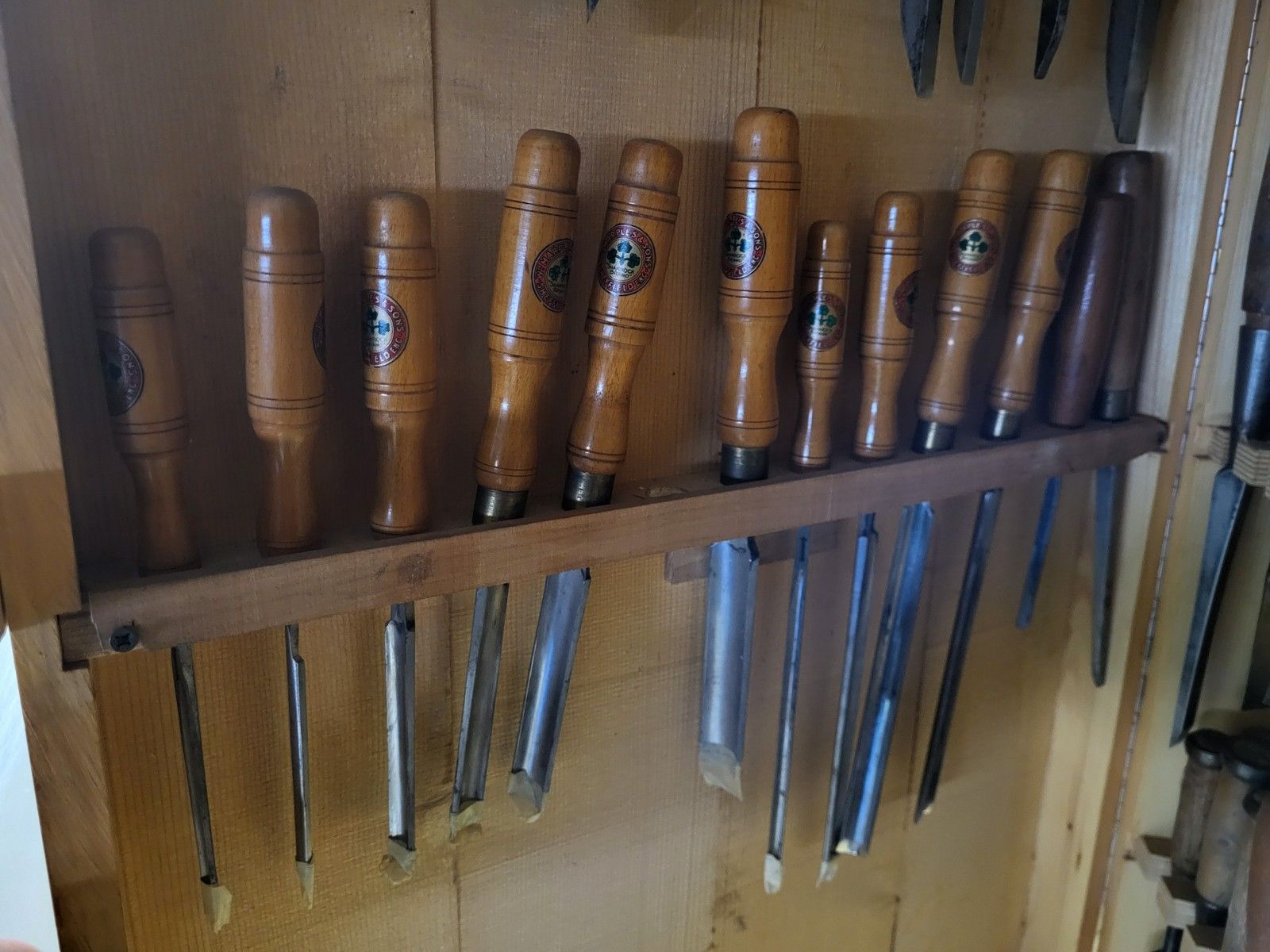


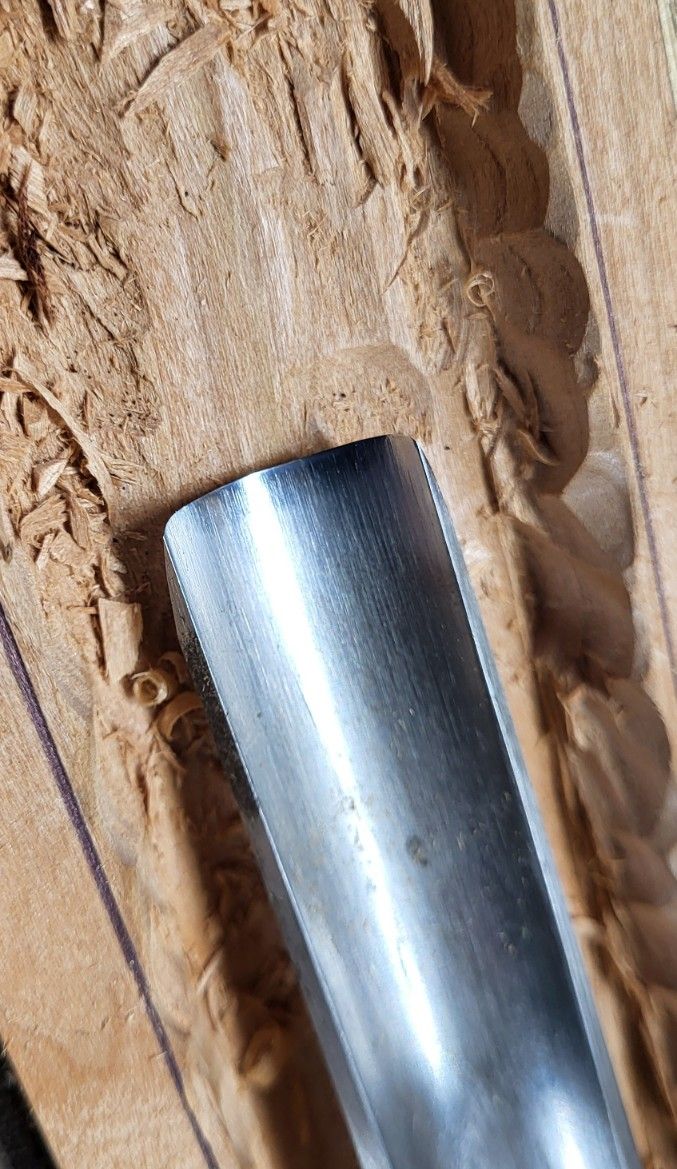


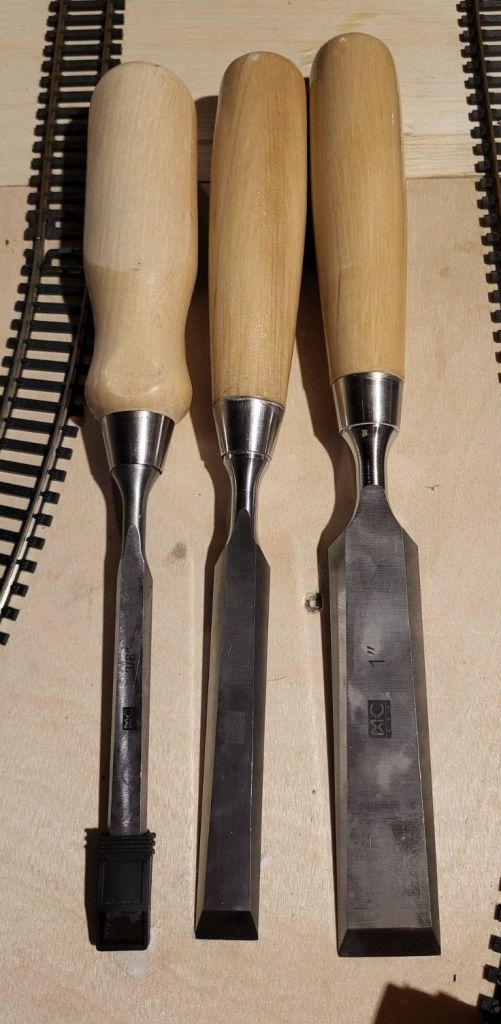





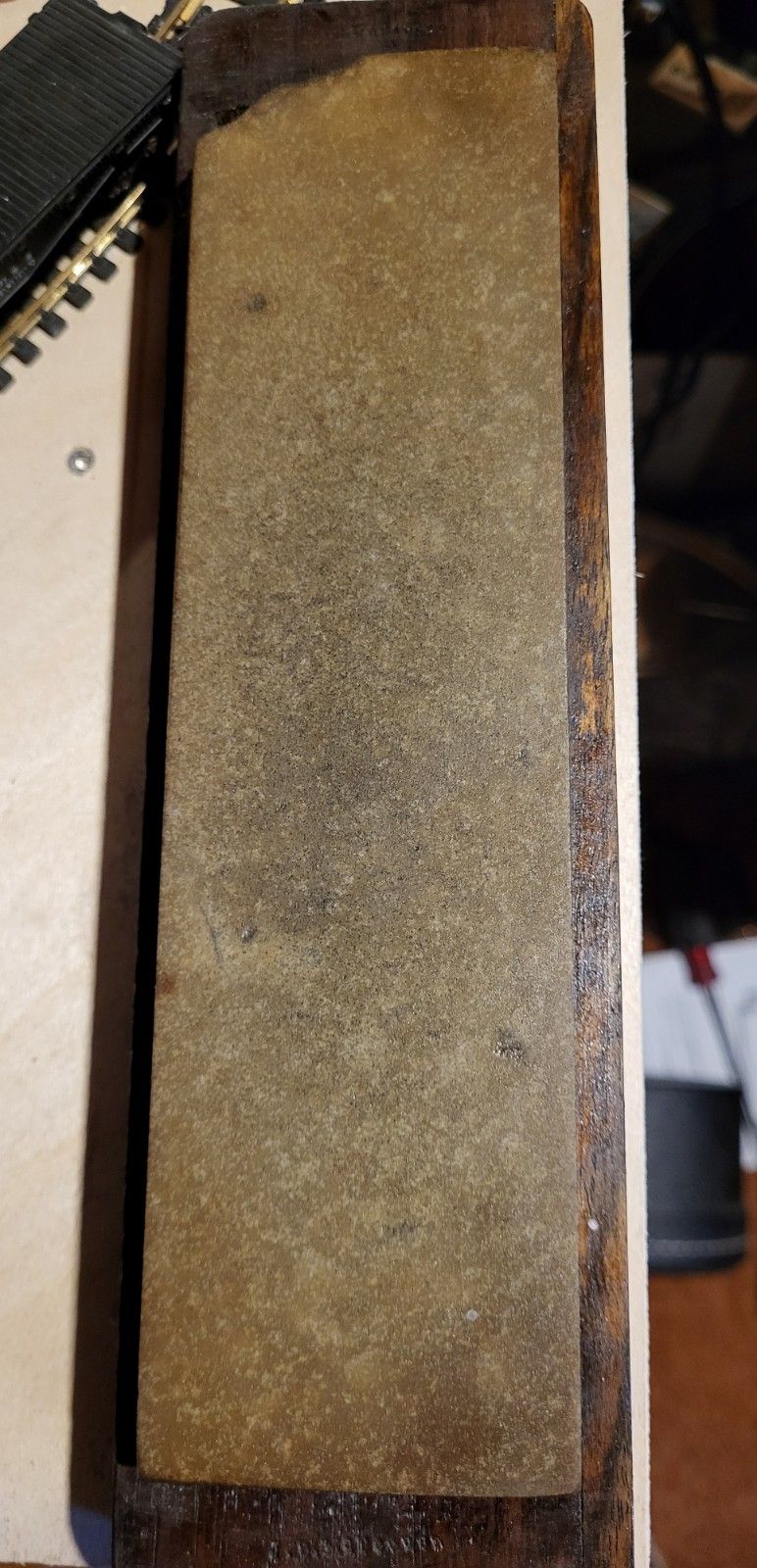
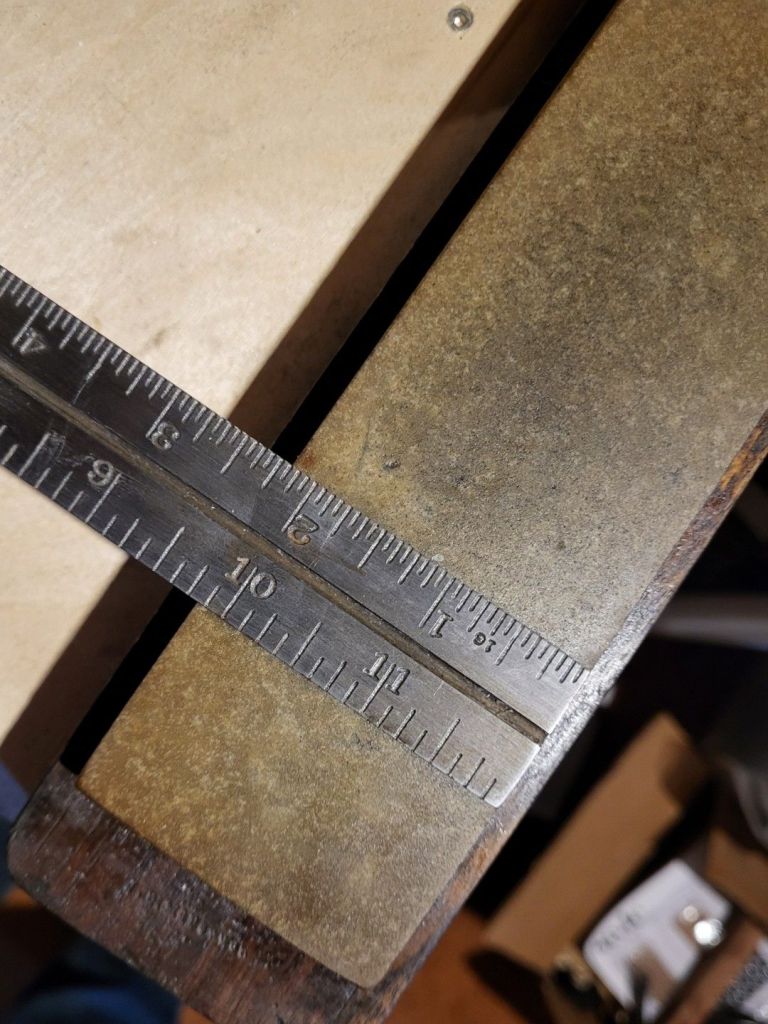

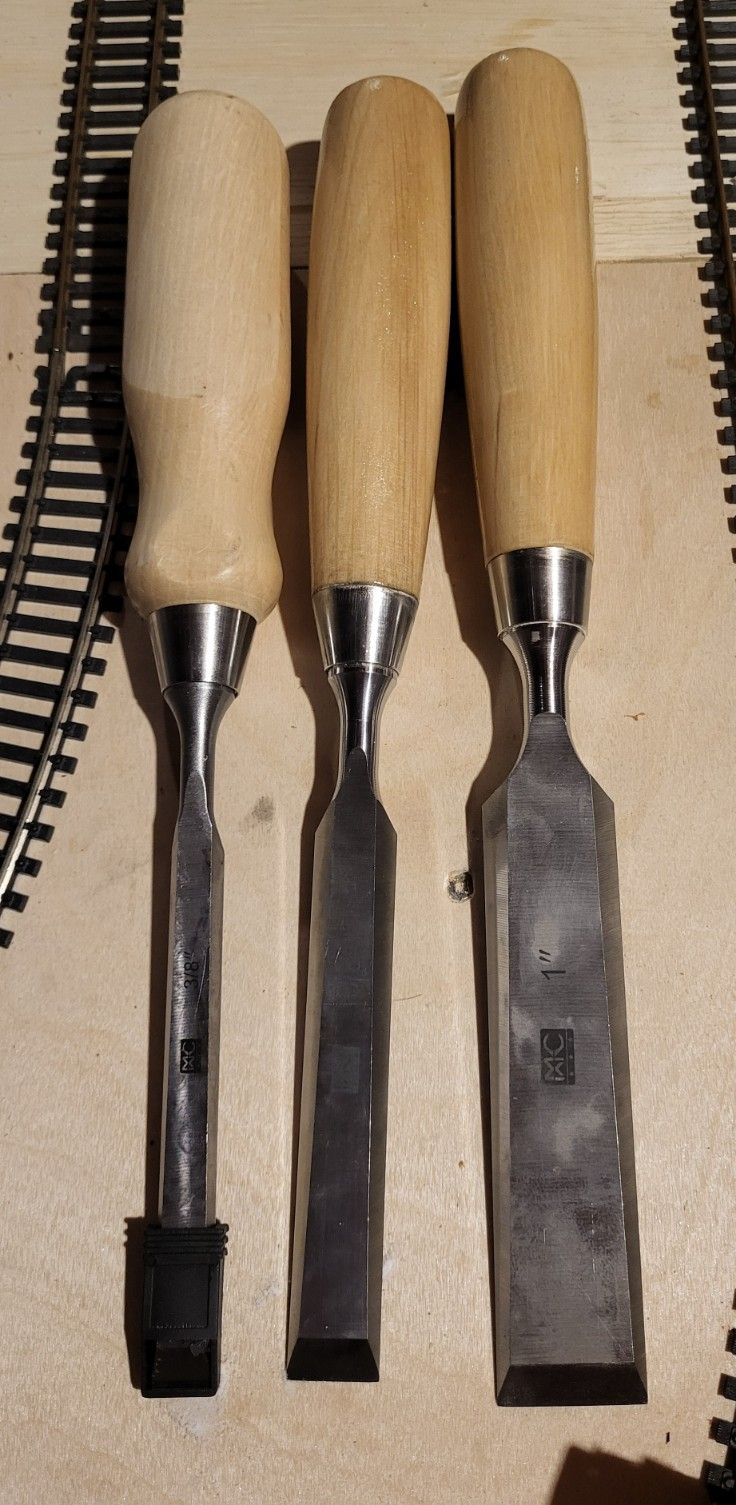


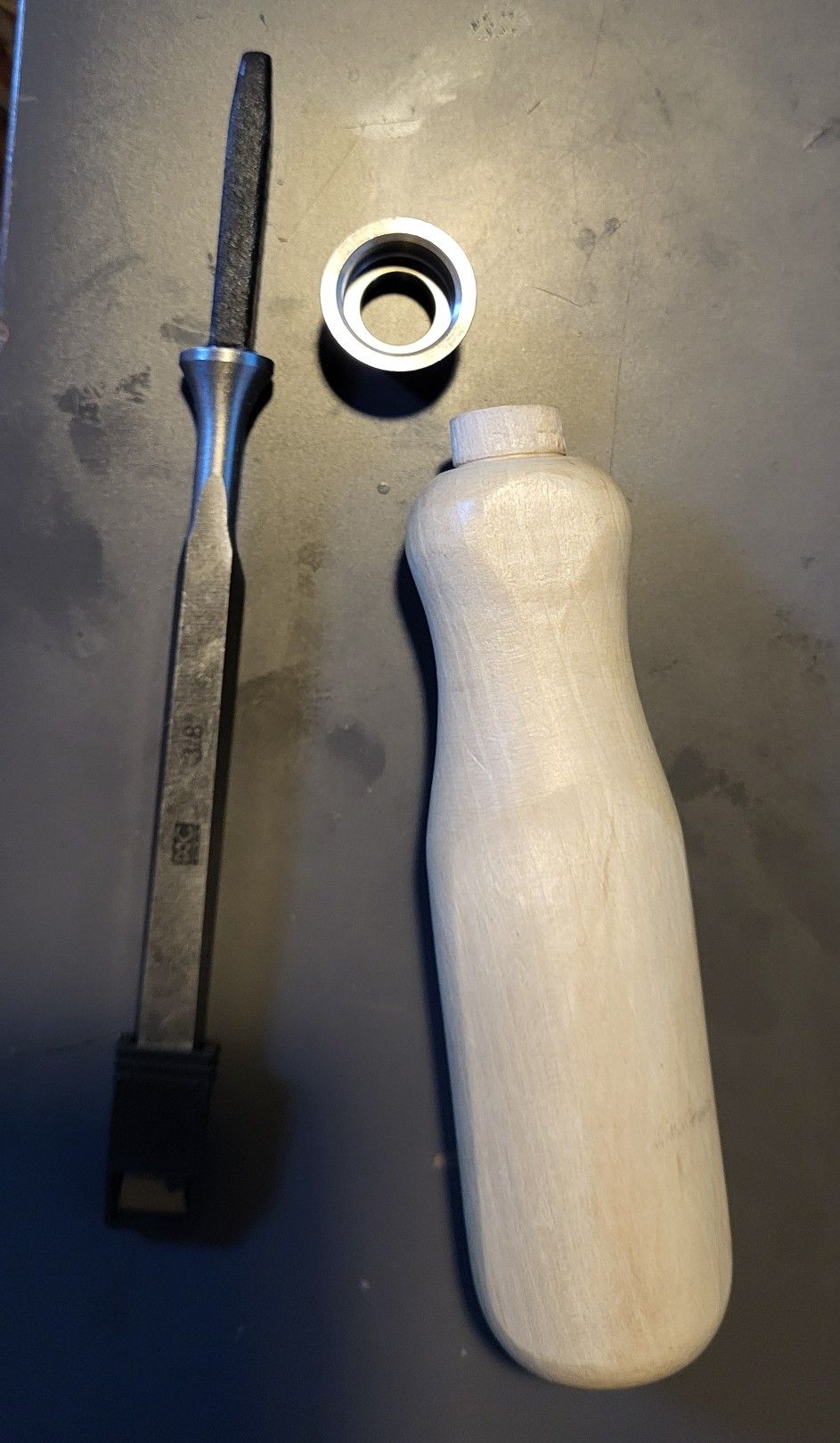
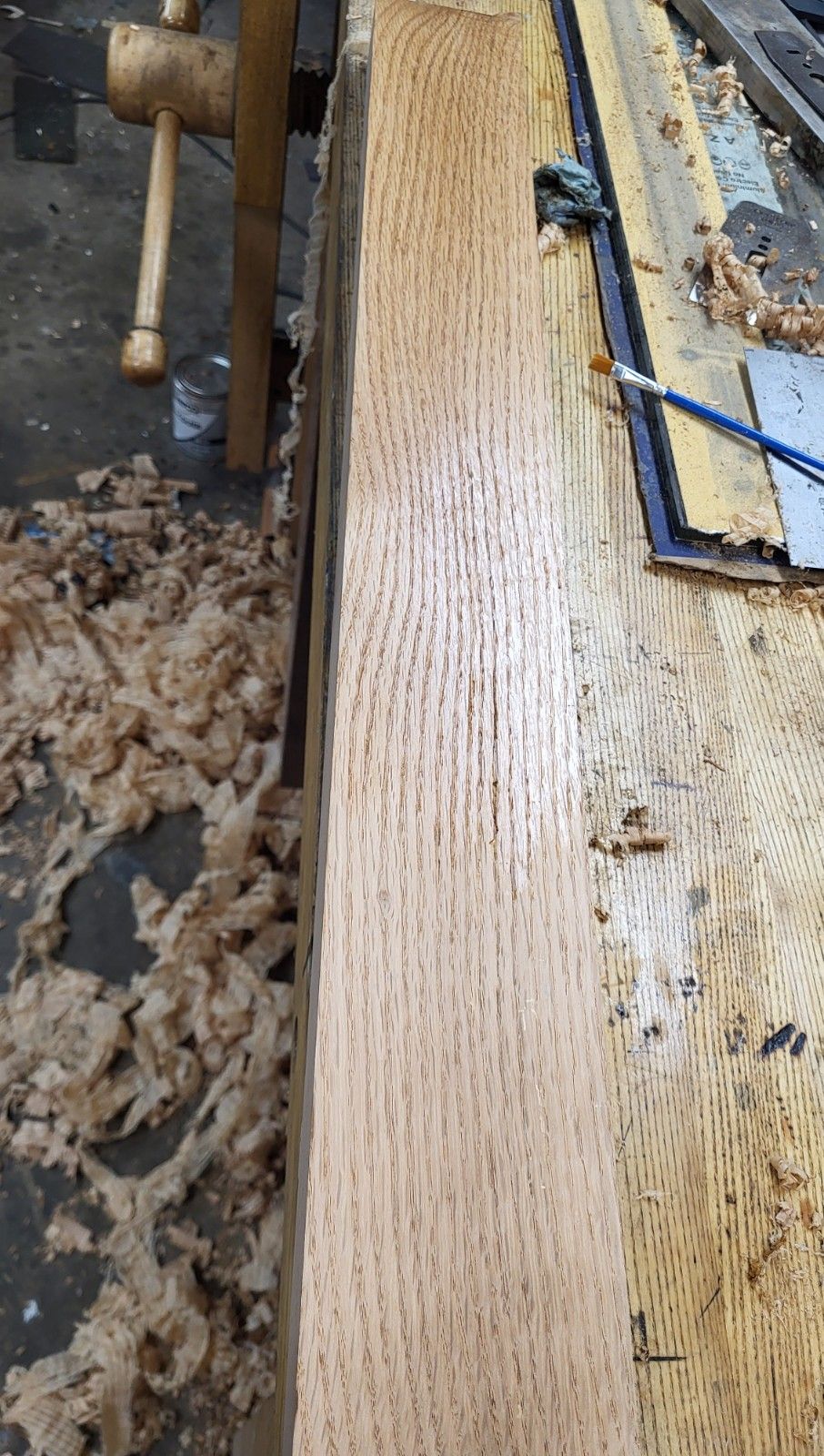
 Of Making by Hand with Wood and Steel
