So – the results for everything but the shop made varnish were pretty abysmal. the varnish is an odd choice, and you may be thinking “what about polyurethane” and so on, I’d imagine thinned, that would also work fine. You don’t want a heavy coat on anything and finsihes with adhesion problems will just come off and that’ll be ugly as it’s going to occur over a period of time and be about as attractive as a peeling car hood.
I used varnish because it’s tolerant of a lot of things and will still have good adhesion and toughness. In short, it could actually be practical in this case, even as a base for under wax.
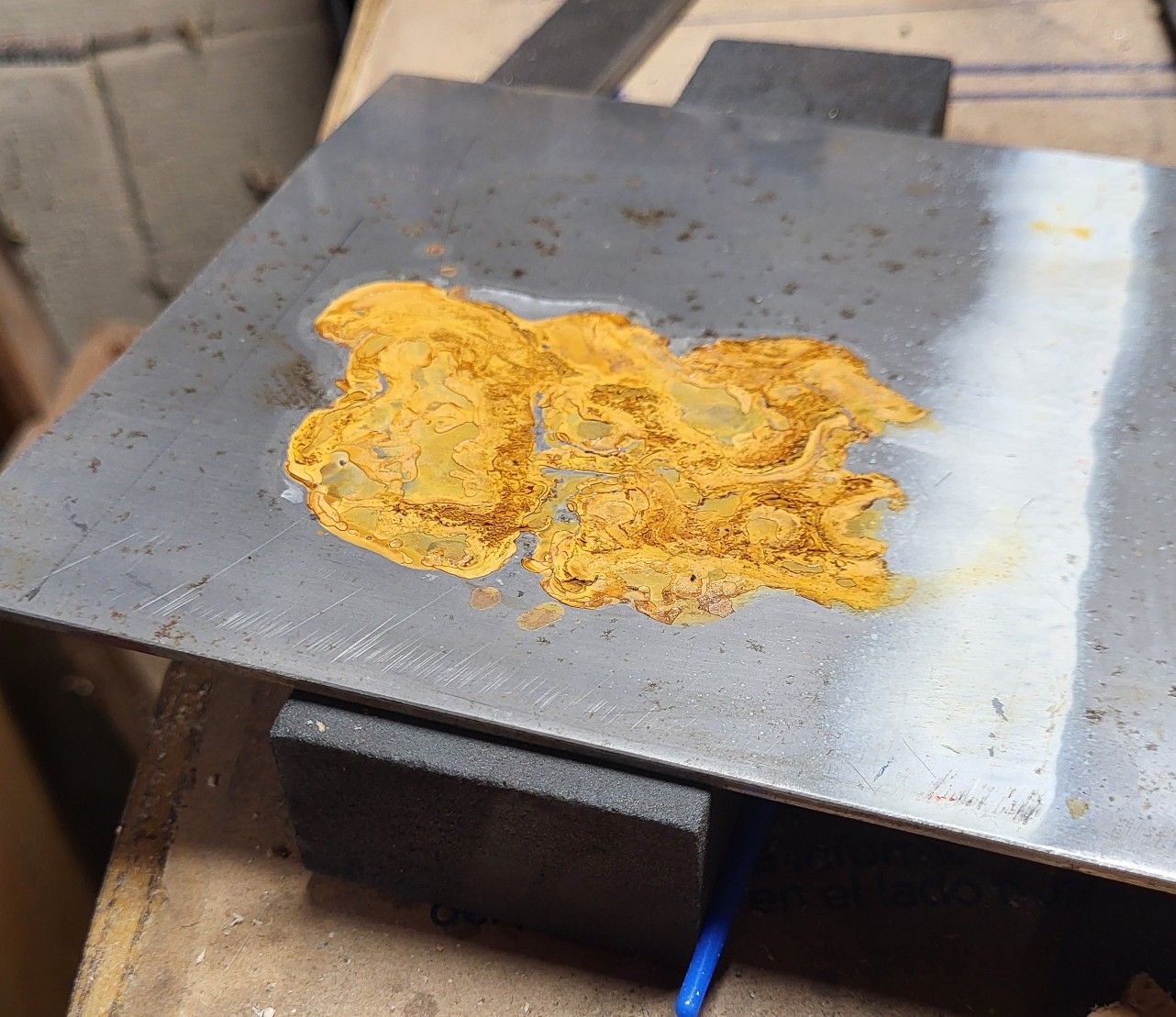
To see how deep the damage is, I put the varnished sample aside – in reality if I were using it, I’d scuff it with steel wool and wipe on again to get rid of the deglossed spots. But for the others, I spent about 15 seconds on each spot with #00 steel wool. Here is how the Ceramic Finish sample fared:
It’s not that bad in the center, but there is dimension and depth to the rust at the edges and steel wool will not remove it. If you have a prized cast iron surface, this is disaster that you won’t just sand out. Fail, all the way around where plain standing water is concerned.
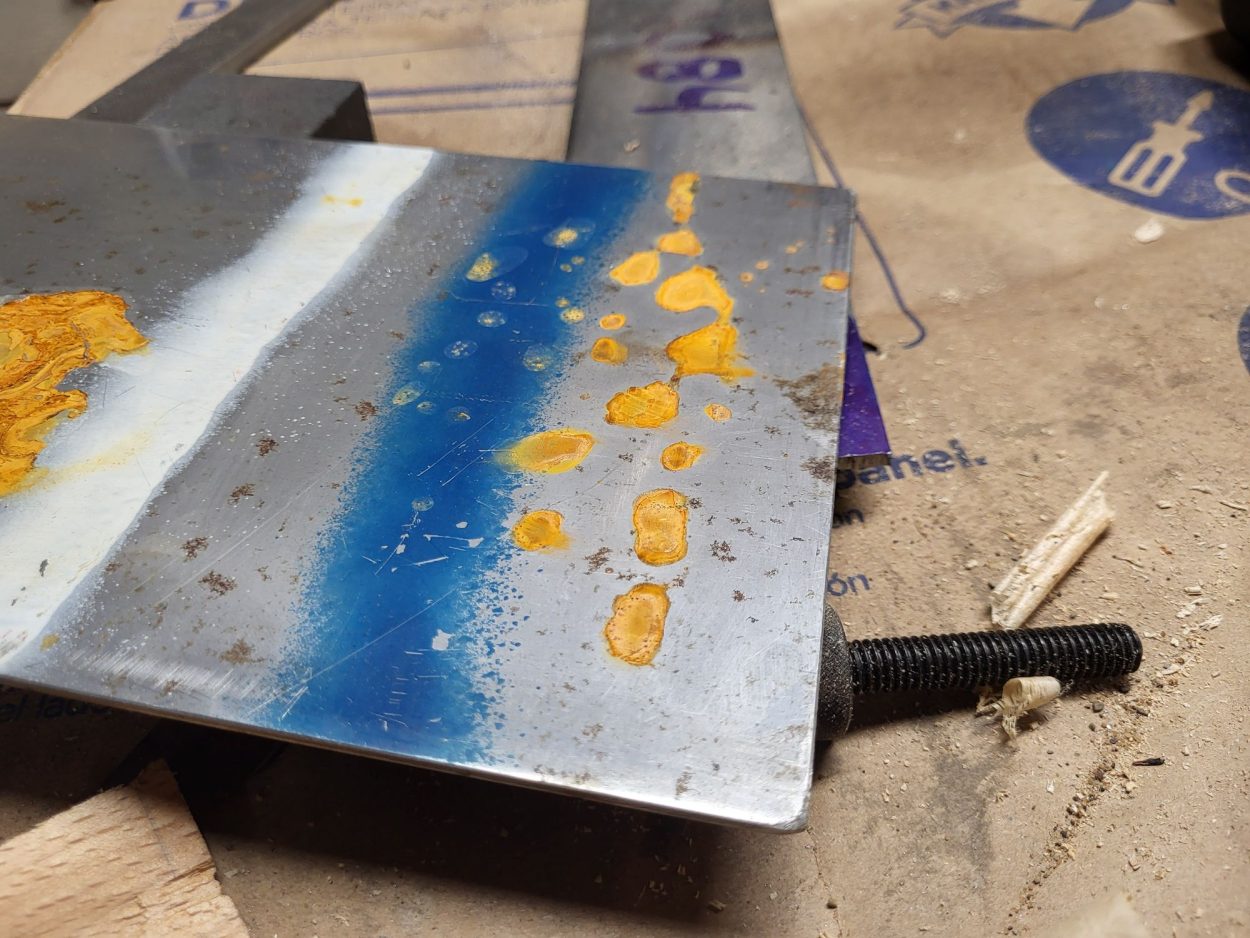
Shellac – expect disaster, and that’s what we find:
The remaining rust with depth is more vivid and the larger damage more uniform. Fail all around.
And the carnauba wax after steel wool:
Apologies on this -the test was a bit of an afterthought and only the darkened areas on the bottom of the right side plate are from the carnauba – I didn’t clean all of the rust off of it around the edges that was there before starting. But surprisingly, most of what is left is discoloration and there is nothing with a three dimensional feel.
Fail chasing perfection, but success – surprisingly – a very practical solution for moderate rust control.
I did nothing further with the varnished sample.
The results of this are fairly important to me, but because I have water in the shop for tool grinding purposes. Once in a while, i run around and dribble a few drops where I didn’t want to and find the result later. I’ll be using Carnauba where oil isn’t durable enough, and varnish where Carnauba may not wear long enough or provide needed protection for a non-work surface.
I do have a problem with vapor/humidity rust on bar stock and am lazy about doing anything because metalwork results in the loss of the mill surface. However, i have once in a while found that the rust missed on stored bar stock goes deep enough that I have to do further grinding or lapping to get that out, and that’s avoidable. I’ll think about maybe coating three pieces of metal to test if seasonal rust is stopped by all three – I’d imagine it may be, and the results might not be interesting in a daily use sense vs. storage or calamity, but still in my mind sticks the whole thought of “the ceramic coatings are sold as a plus step on finishes”, what good are they if you already have a good finish. Nothing that i can tell.
If you like to see water bead, you can actually buy 20-nanometer silica from china and mix it in whatever you’re using. This is probably not how the refractory resin in the ceramic finsihes exists, but the feel and the dazzling water beading effect is the same.
And the Nanosilica there also does not make anything waterproof if it wasn’t already. I just assumed from the top that the actual finish used beyond the whiz bang water beading effect would be much more like a legitimate finish than it is.
When rust is mentioned in comments or on forums or reddit or wherever, or even locally by friends of mine, there’s always disbelief that some basic product that isn’t value added and massaged into a sow’s-ear silk purse is suitable. Boeshield may work, some other urethane finish in a little bottle might work, but I doubt any of these things work as well as the basic components you already have around. if you have your own oil, but think it needs rust inhibitor – test that first. If you still think it does, find out what the rust inhibitor is. Chances are whatever is being marketed at you is 1 unit of value sold for you at 10, 20 or 100 units of cost. No thanks.






 Of Making by Hand with Wood and Steel